


BY OMNIYA ALI
“We know these truths. Canada’s governments and institutions – hospitals, schools, policing, laws and social services – weren’t created with serving Indigenous people in mind. They were designed to fail us.” – Tanya Talaga, The Globe and Mail
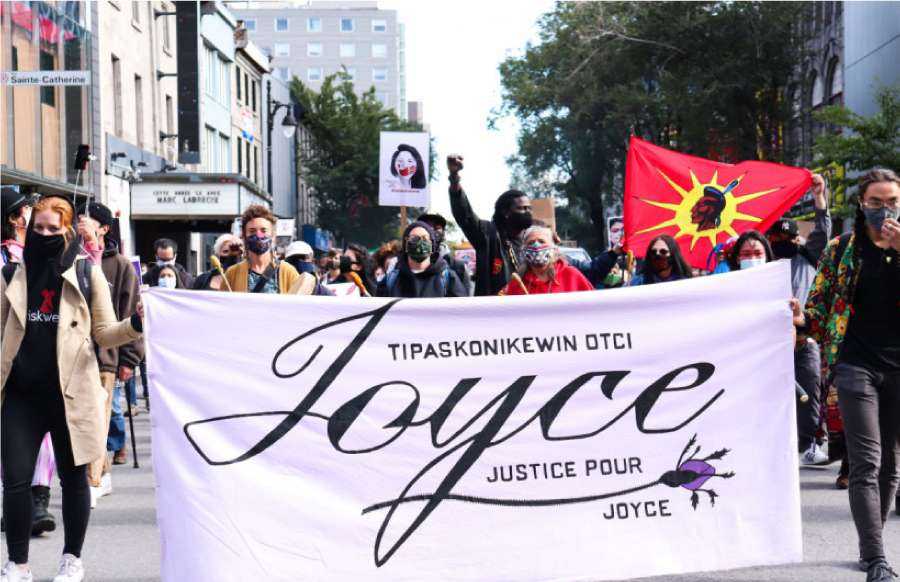
A video released in late September showed Joyce Echaquan, a 37-year-old Atikamekw woman being mistreated by hospital staff in Quebec. While the contents of the video have proven to be extremely saddening to other members of the Indigenous community, they have not failed to openly discuss it to increase awareness and once again demand their rights. Unable to escape the gruesome monster we know as systemic racism, Echaquan arrived at a hospital in the Quebec city of Joliette complaining of stomach pain. Almost certain that her pain would be downplayed and dismissed, she also told the nurses that she had previously suffered similar issues and informed the staff of her heart condition. To which they coldly responded with “Are you done acting stupid? Are you done?” among other remarks calling her stupid as hell and watching her as she winced in pain, this woman’s rights were very clearly not delivered to her.

Although to the average citizen this situation is obviously an abuse of power and a deliberate display of the lack of empathy towards minorities, the premier of Quebec believes otherwise. François Legault treated this as an isolated event and informed reporters that at least one of the nurses had been fired for the incident. He then proceeded to reject the notion that the maltreatment and death of Echaquan was a clear representation of a much larger issue of racism within Quebec. Expressing “I really don’t think we have this kind of way of dealing with First Nations people in our hospitals in Quebec.”
As the hospital board affirmed in a statement,‘‘we will not tolerate any remarks of that type from our personnel,” it once again raises several questions such as: How effective is it to punish the personnel after the occurrence of an incident? Is it included within their training? Are Indigenous people accounted for equally as much as the next ethnicity?
To further prove the lack of empathy and professionalism associated with the Indigenous community in health care, Marc Miller, federal Indigenous services minister pointed out another incident. In another case, the staff of a hospital in British Colombia placed bets on the blood alcohol content of incoming Indigenous patients. Mixing their services with harmful stereotypes and misconceptions.
Bracketing, also known as phenomenological reduction, is used in qualitative research as a tool to suspend one’s judgement about the natural world that could possibly influence the analysis of the data. This could include vested interests, personal experience, cultural factors, assumptions, and hunches. This method should be applied within the medical context in order to withhold personal judgements and opinions of a patient to provide the best service possible. Furthermore, diversity within medical training has increasingly been discussed among POC to address issues within the system. Much as the judicial and justice systems need to be readjusted to cater to a more diverse community, the medical system does as well. Rather than learning the needs and realities of exclusively Caucasian patients POC must also be accounted for to avoid incidents like this from occurring in the future.
In another response to the video of Joyce Echaquan, Frances Elizabeth Moore, an Anishinaabe activist community worker shared some of her own experiences. She said “I always need to advocate for myself. At times, I’ve brought others to appointments because I did not feel safe going alone. This isn’t new. This isn’t unheard of. You just haven’t been listening. I hope some serious reform comes from Joyce’s heroic actions. Rest well sister.”
If Canada prides itself on meeting all the basic physiological and safety needs of its citizens, why do people like Joyce and Frances feel the need to take extra steps to ensure they receive them? When is Canada going to stop placing the Indigenous woman at the very bottom of its list? When will the Truth and Reconciliation Commission of Canada’s Calls to Action be answered?
Stay in the loop with exclusive news, stories, and insights—delivered straight to your inbox. No fluff, just real content that matters. Sign up today!