



BY SIMONE J. SMITH
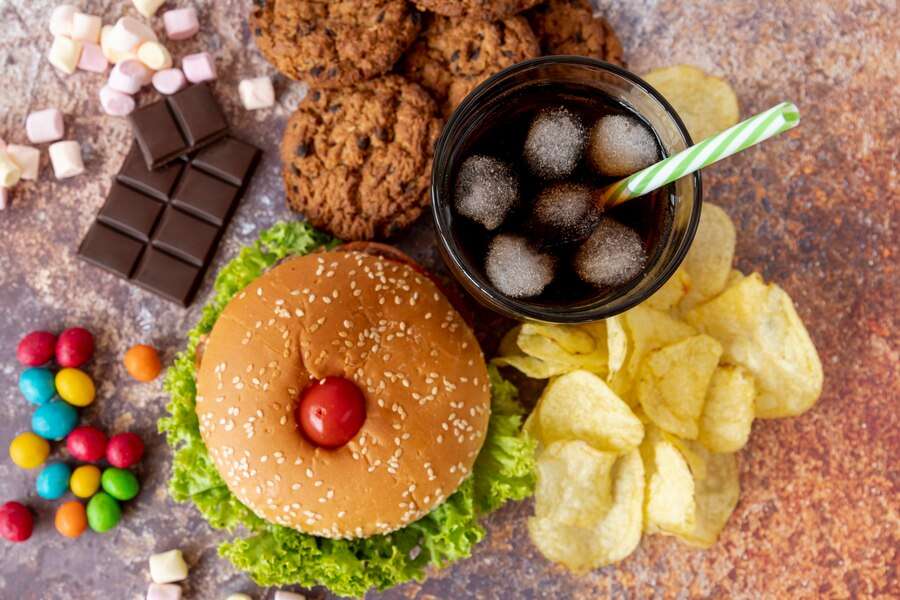
It is convenience that often lures busy Torontonians into the clutches of processed foods. Grab-and-go meals, flashy packaging, and the promise of instant gratification make it all too easy to succumb to the allure of the drive-thru, or the supermarket aisles overflowing with pre-packaged snacks.
While these options may seem like a time-saver, their impact on our health can be a slow and insidious erosion of vitality. Today, we’ll delve into the hidden costs of this convenience, exploring how these readily available options may be compromising our well-being. We’ll also offer practical strategies for breaking free from the processed food trap and cultivating healthier eating habits, even in the midst of a hectic Toronto lifestyle.
Over the past few years, there’s been a growing number of studies about ultra processed foods and how they are responsible for the increase in chronic health concerns today. According to recent studies, ultra processed foods now constitute 50% to 60% of the daily energy intake among high-income countries, and low-and middle-income countries are starting to follow in our disastrous footsteps.
If you look past their attractive packaging and “enjoyable” flavours — properties that are intentionally given to these foods to make them more marketable and appealing to consumers — you’ll see that these convenient, mass-produced foods are putting your health in jeopardy.
A recent Swedish study provides compelling evidence that ultra processed foods increase all-cause mortality, especially among women. The October 2024 study aimed to understand the molecular impact of consuming ultra processed food and how it affects mortality.
The researchers used data from the Malmö Diet and Cancer cohort study, which began in 1991, and involved 27,670 participants. The participants were asked to keep a food diary, recording their daily meals for a week, and were interviewed as well about their diet. Their blood samples were also collected and analyzed.

In the featured study, the primary subgroups that make up the participants’ processed food intake included: starchy foods and breakfast cereals (26%), beverages (23.3%), sugary products (18.4%), sauces and fats (15.5%) and meat and fish (13.6%). These are all classified as “NOVA 4 foods.” What are NOVA 4 foods? Here’s a summary of the NOVA categories:
- NOVA 1 (Unprocessed or minimally processed foods) — These are edible plant and animal products (whole foods) that are minimally modified or preserved to improve their shelf life and ease of preparation.
- NOVA 2 (Processed culinary ingredients) — They undergo grinding, refining and pressing. Honey, salt, sugar, butter and vegetable oils fall under this category.
- NOVA 3 (Processed foods) — These are made by combining NOVA 1 and 2 — Group 2 foods are added to Group 1 foods to enhance their “durability and sensory qualities.”
- NOVA 4 (ultra processed foods and drinks) — They contain little to no Group 1 components and are industrial formulations that use unusual additives outside of Group 2. These foods are mass-produced and highly processed for high palatability.
After analyzing their blood results, the researchers found that higher intake of ultra processed foods was associated with “unfavorable lipid profiles,” including reduced HDL, or “good cholesterol” and increased VLDL or “bad cholesterol.”
These findings show that there is a positive association between ultra processed food consumption and mortality from: cardiovascular disease, cancer. and respiratory disease. Again, a stronger link was seen in female and older participants, compared to male participants.
In an article titled, “Ultra-processed Foods and Human Health: an Umbrella Review and Updated Meta-Analysis of Observational Evidence,” researchers reviewed existing meta-analyses and publications involving ultra processed food consumption, covering a wide time period — from the inception of these foods up until 2023.
The results were startling, as they showed that ultra processed foods were associated with 25 different negative health outcomes among: adults, children and adolescents. These include respiratory diseases, kidney, liver, or gastrointestinal diseases, mental health problems and more.
We’re all hooked, it’s true, but remember, it’s not about deprivation, it’s about liberation. The sooner you remove ultra processed foods from your diet, the closer you will be to a healthier, happier you. Start small. Trade that sugary fizz for sparkling water. Swap those processed chips for a vibrant rainbow of veggies. Each bite of whole, unadulterated goodness is an investment in your well-being. It’s a chance to reclaim your health, one delicious, nourishing choice at a time.
REFERENCES:
https://www.sciencedirect.com/science/article/pii/S0261561424003807
https://www.news-medical.net/health/The-NOVA-Method-of-Food-Classification.aspx
https://www.clinicalnutritionjournal.com/article/S0261-5614(24)00122-5/fulltext
Eating Ultraprocessed Foods Raises Mortality Risks, Especially for Women
Stay in the loop with exclusive news, stories, and insights—delivered straight to your inbox. No fluff, just real content that matters. Sign up today!