

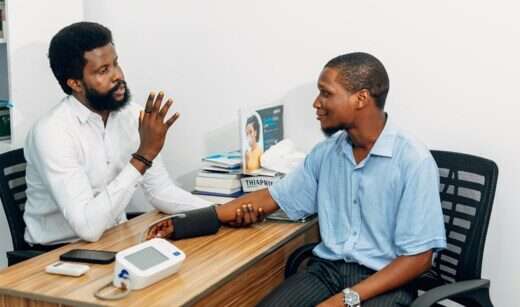

A Black man of Caribbean, or African descent living in Ontario faces nearly double the risk of developing prostate cancer compared to his non-Black counterpart. Yet, a search for local health programs in Toronto tailored to this reality reveals a significant and scarce gap in wraparound services and support. These gaps in health and social care reveal a deeper issue within our Canadian public health systems, extending beyond access to care to a problem of visibility rooted in how we collect and understand health data.
Recent research from 2024 examined 6,534 men in Canada and found that Black men were diagnosed with prostate cancer at an earlier age than other men. The study showed that Black men were diagnosed at a mean age of 62 years compared to 64.6 years for men of other races. This earlier onset suggests a need for earlier screening and intervention strategies; however, the current state of our health system lacks the granular data needed to develop these targeted approaches.
Canadian health data fails to differentiate within the broad category of “Black men,” with the lack of equity- and race-based data. This means the unique health experiences of men from the Caribbean are grouped with those of men from various African countries and those born in Canada. Research has identified multiple interchangeable terms used in Canadian health studies without a clear rationale. This inconsistency reflects a broader problem in how we conceptualize and measure health in diverse populations.

The consequences of this data gap are significant. When health researchers cannot distinguish between Caribbean and African ancestry, or between immigrant and Canadian-born Black men, they cannot identify which subgroups face the most significant challenges. Healthcare services become mismatched because interventions cannot be tailored to the people who need support most. This affects people seeking care in Toronto hospitals and clinics every day.
Toronto is home to a large Caribbean community. The health of men within this diaspora is shaped by: migration history, economic precarity, and settlement stress. These social determinants of health influence health outcomes, but are often invisible in mainstream health statistics. According to Statistics Canada, the African-born Black population surpassed the Caribbean-born population for the first time in 2016. This demographic shift highlights the growing diversity within Black communities and underscores the urgent need for disaggregated data.
“We need to ask not only who is at risk, but also why.”
As we know, the issue extends beyond prostate cancer. Black men in Canada experience elevated risks of dying from diabetes, cerebrovascular disease, and HIV/AIDS. Yet, without proper data disaggregation, we cannot determine whether these risks are distributed equally across all Black communities, or whether certain groups bear a disproportionate burden. This erasure means that public health policies may not address the root causes of health disparities.
A progressive approach to public health requires us to look beyond the surface. We need to ask not only who is at risk, but also why. This involves collecting data that represents the diversity of the Black population in Canada and engaging with communities to understand their specific health needs. It also includes developing health programs that are culturally safe and welcoming.
The health of Black men in Toronto is a vital public health concern. Addressing the current blind spots in our health system is a matter of equity and social justice. It is time to move beyond a one-size-fits-all approach to healthcare. We need to build a system that sees and serves all communities in their full complexity. This requires investment in better data collection methods and targeted health and social interventions that resonate with our communities.
Stay in the loop with exclusive news, stories, and insights—delivered straight to your inbox. No fluff, just real content that matters. Sign up today!












Steven Walters
January 20, 2026 at 9:56 pm
This is a very great finding, what I learn here wasn’t thought to me in school or university. With this in mind I will consider my health more seriously and get check at the appropriate age suggested by my doctor. Thank you for this article looking forward to for more health suggestions.