

Connect with us

Subscribe

Subscribe

Junior Contributors

The hidden price of war: Why global conflicts are making your groceries more expensive

“The food industry is like a spiderweb, if you touch one part, and the whole thing shakes and is disturbed.”

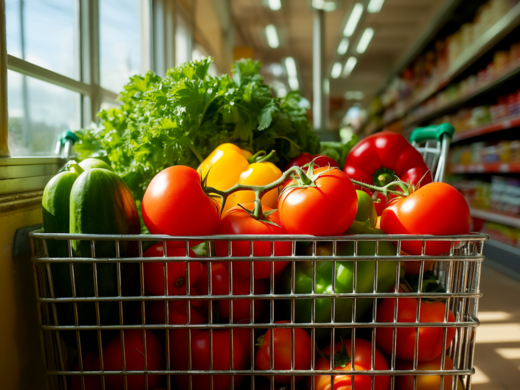
Photographer: Mariana Pedroza

When the battlefield reaches the breakfast table

It’s easy to think war will only affect people that are near it but look at the increase of people at food banks, and you will understand. Every new conflict disturbs the global market, and one of the first things that began to rise from war isn’t just smoke, it is also prices.

From the war in Ukraine to tensions between multiple countries in the Middle East, the global market is being pushed to its breaking point. When goods can’t move, and ships can’t sail the prices creep up slowly.

From fields to fallout                                                                                                

War doesn’t just destroy cities; it destroys farmland and crops. Farmers are unsafe, machines start to break down, and the roads are not safe at all. Ukraine, once known as the “breadbasket of Europe,” saw its trade of wheat and corn collapse after Russia’s invasion.

Broken families and higher prices                                                                            

The food industry is like a spiderweb, if you touch one part, and the whole thing shakes and is disturbed. When conflicts block trade routes, or ports, food can’t reach the places that need it most. Suddenly, nations are in need, multiple countries ban exports, and the flow of goods comes to a halt.

This global halt pushes prices even higher for everyone. Whether it’s rice, wheat, or cooking oil, less supply and high demand always mean inflation, and this time, it’s not caused by the community rather by war.

The energy domino effect                                                                                      

Behind every loaf of bread and carton of milk is a hidden cost; energy. Farms need fuel for tractors, factories need power to work machinery, and fertilizers come from natural gases. So, when war breaks out in oil-producing regions, the entire food chain takes a hit from it.

The last few years have shown how weak the system truly is. Rising fuel costs meant higher fertilizer prices, which made it harder for farmers to plant crops. From Canada to Kenya, that domino effect made everything, from bread to beef, cost more than ever. 

The sad truth? The poorest countries are almost always the ones that pay the highest price. Nations that depend on imported food have no choice but to buy at whatever price the global market sets. For families already struggling, a small rise in global food costs can mean skipping meals or going hungry for days.

Meanwhile, wealthier countries like Canada still do feel the rise in prices, especially in lower-income communities where grocery costs are already putting families in stress. The conflict itself might seem far away, but its impact is felt in every grocery aisle and checkout line.

Can we fix it?                                                                                                        

Experts say the answer isn’t to just wait for peace, it’s to be prepared better for the worst. Investing in local farming, cleaner energy, and better global cooperation can make the food system stronger and less dependent on only a few major countries that may export specific goods.

Food security isn’t just about having enough food for all, it’s about protecting economies. When war breaks out, the world shouldn’t starve, because one trade route shuts down and causes an issue in another continent.

Why it matters                                                                                                          

Global conflicts might start with politics, but they often end up causing a dent in our bank accounts. Food prices don’t rise on their own, they rise because the systems built for it constantly grow, move, and are disturbed by conflict.

Next time you notice your grocery bill creeping higher, remember: the problem didn’t start in your supermarket, it started on a battlefield halfway around the world.

Newsletter Signup

Stay in the loop with exclusive news, stories, and insights—delivered straight to your inbox. No fluff, just real content that matters. Sign up today!


Written By

Click to comment

Leave a Reply

Your email address will not be published. Required fields are marked *

Trending

The Warnings We Ignored

Featured Cover Story

What It Means to Be a Lifelong Supporter: Larry Weltman on Loyalty, Community, and the Beautiful Game

Sports

Sharon Marley Reclaims Her Voice

Women Empowered

Toronto Collides Into New Culture

Entertainment

Advertisement
Newsletter Signup

Stay in the loop with exclusive news, stories, and insights—delivered straight to your inbox. No fluff, just real content that matters. Sign up today!

Legal and Advertising Disclaimer: Advertisements, sponsored content, business listings and other promotional materials are supplied by third parties. Their publication does not constitute an endorsement, recommendation, representation, warranty or guarantee by TCN Now Inc. Advertisers and content providers are responsible for the accuracy, legality and substantiation of their claims and for obtaining all necessary copyright, trademark, privacy and other permissions. To the fullest extent permitted by law, TCN Now Inc., its directors, officers, employees, contractors and affiliates shall not be liable for any loss, damage, cost, expense or claim arising from third-party advertisements, products, services or promotional content. TCN Now Inc. reserves the right to refuse, edit, suspend or remove advertising or promotional content at its discretion. Editorial and Content Disclaimer: The opinions, commentary and viewpoints expressed in signed articles, columns, letters, guest submissions and other contributor content belong to the respective authors and do not necessarily reflect the opinions or views of TCN Now Inc., its directors, officers, employees, editors or affiliates. Content published by TCN Now Inc. is provided for general informational purposes only and is not intended as legal, financial, medical or other professional advice. While reasonable efforts are made to ensure accuracy, TCN Now Inc. does not guarantee that all information will be complete, current or free from error. To the fullest extent permitted by law, TCN Now Inc. disclaims liability for losses or claims arising from reliance upon contributor opinions, third-party submissions or general informational content. Copyright © 2026 TCN Now Inc. All rights reserved. Unless otherwise stated, the text, photographs, graphics, logos, designs and other original content appearing on this website are owned by or licensed to TCN Now Inc. and may not be copied, reproduced, republished, distributed, modified or commercially used without prior written permission, except as otherwise permitted by law. Third-party names, logos, trademarks and content remain the property of their respective owners.

Connect
Newsletter Signup

Stay in the loop with exclusive news, stories, and insights—delivered straight to your inbox. No fluff, just real content that matters. Sign up today!