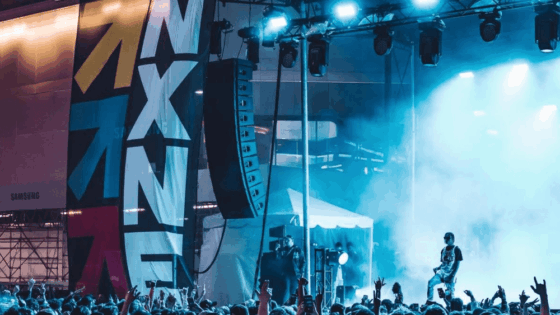




The moment the bass drops and the crowd surges forward, a familiar scent used to bloom over the festival grounds for decades: pine, skunk, and the dank promise of rebellion. Yet, years after legalization, the very act of lighting up legally (or buying a joint) remains a forbidden stunt at the nation’s largest outdoor events. The dream of hazy cannabis-friendly concerts has failed to materialize. Instead, it has been replaced by a tangled web of bureaucracy, liability fears, and an absurd regulatory standoff.
The irony is not lost on anyone who remembers the pre-legalization era. Back then, security guards often turned a blind eye to consumption, whether acknowledging the cultural reality of the concert experience, or merely not wanting extra work. Now, the government has given its blessing to cannabis, but major private events (the sprawling fields of Osheaga, the crowded park lawns of Veld, or the bustling fairways of the CNE) remain stubbornly, and often hypocritically, dry.
The reason for this blackout is less about public safety and more about a suffocating storm of provincial regulations and logistical dread. In Ontario, for example, the Cannabis Control Act forbids the sale of cannabis anywhere other than a licensed retail store. This rule immediately kneecaps any festival promoter’s ambition to simply sell joints from a tent alongside the beer vendor. Selling beer is a straightforward regulatory process; selling cannabis involves a complex, immovable retail license tied to a permanent address.
The problem goes deeper than just sales. Even allowing legal consumption in designated areas is fraught with crippling liability fears. While Ontario’s legislation permits cannabis use where tobacco smoking is allowed, festival organizers have taken a defensive stance. Their primary concern is simple: impairment liability. Unlike alcohol, where sobriety testing is relatively clear-cut and universally accepted, establishing a legal threshold for cannabis impairment in a fast-paced public setting, remains a legal minefield. Promoters worry that if a patron consumes cannabis on-site and then causes harm, the festival could be held responsible for providing, or sanctioning the environment where impairment occurred. This fear of litigation is a more potent deterrent than any government fine.

The current compromise is a logistical nightmare. Festivals typically default to the “carry-in, but don’t consume” rule. Patrons are usually allowed to bring a small, legal amount of cannabis onto the grounds, sealed in its original packaging, a gesture that acknowledges the law. Yet, any attempt to use it is met with swift, heavy-handed security intervention. Festivalgoers are forced into a furtive, ridiculous dance: they carry the legal product, sneak into a crowded corner, consume it quickly, and risk expulsion. The legal system forces the product to remain in the shadows, fostering the very unsanctioned behavior legalization was meant to eliminate.
The financial incentive to change this reality is enormous. Promoters know a legal, controlled cannabis sales zone would introduce a massive new revenue stream, potentially offsetting the high costs of production and security. Until the regulatory framework catches up to the cultural reality, that money remains on the table.
Attempts to carve out “cannabis consumption zones” have been met with mixed success. Some smaller, municipally backed events have secured temporary permits, often relying on strict separation from food and alcohol zones, and rigid security checkpoints. These isolated successes prove the concept is viable, but they highlight the bureaucratic rigidity that prevents scaling the idea to major events that draw tens of thousands of people.
Ultimately, the great Canadian cannabis concert experiment is stalled in legal purgatory. It is a cautionary tale of how legalization, instead of normalizing the product, merely shifted the enforcement burden from the police to private security. The scent of cannabis still floats over the crowds, a ghost of the counter-culture past. Now, that haze is less an act of rebellion and more an expression of frustration at a system that remains paralyzed by its own paperwork and fear of litigation. Until the provinces provide a clear, standardized, and protected liability framework for on-site sales and consumption, the only thing truly legal at the biggest music festivals will remain the warm beer.
Stay in the loop with exclusive news, stories, and insights—delivered straight to your inbox. No fluff, just real content that matters. Sign up today!