


Connect with us

Subscribe

Subscribe

Health & Wellness

Ten ways to help care for a parent with dementia

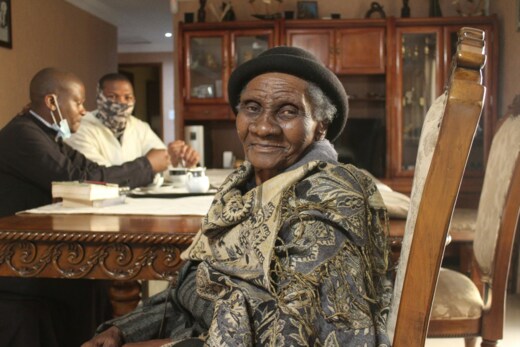
Studies on “person-centred dementia care” show that routine lowers confusion and distress.”

Photographer: Soweto Graphics

Last week I shared thoughts on aging parents. Many of you wrote asking for more, particularly about the challenges of caring for a parent with dementia. It’s not an easy assignment, but here is a list of practical advice.

Start legal, financial, and medical planning now, not later. The experts are emphatic on this: early planning reduces crisis-driven decisions. You need powers of attorney, advance directives, and banking access. Be aware of recurring bill payments. Have access to medical files. Have future care options written down

Establish routines and simplify daily life. Studies on “person-centred dementia care” show that routine lowers confusion and distress. Keep meals, medications, bathing, and bedtime at consistent times. It can help to use consistent cues when adjusting to new routines, like the introduction of a walker. “The doctor asks you to use this new walker…” to which you’ve attached soft handgrips, a favourite photo, a name tag, or anything (safe) they suggest making it their own.

Modify the home for safety before problems escalate. Homes aren’t designed like care facilities, take steps to remove tripping hazards, add grab bars, and improve lighting. Use medication organizers. If wandering is a risk, use alarm or monitoring systems.

Learn how to respond to behavioural changes. Caregivers in multiple studies reported less stress once they learned strategies for redirecting instead of arguing. That can include offering choices (not commands), using a calm voice and simple instructions, and knowing how to step back from power struggles. When caregivers know that behaviour is disease-driven, not intentional, then it’s a matter of training, not stressful relationships.

Share the load, formally and informally. Research consistently shows caregivers who “go it alone” burn out first. Ask siblings, cousins, neighbours, or friends for help with specific tasks: a meal, an hour of supervision, a ride to an appointment. If people say, “Let me know how I can help,” respond with a concrete request. Use respite programs.

Keep medical professionals looped in, and don’t downplay symptoms. Studies find that adult children often minimize behavioural or functional declines when speaking to doctors. Be factual and detailed: “When I visited last week, Mom left the stove on twice.” This allows physicians to adjust care, medications, or supports earlier, improving outcomes.

Monitor nutrition, hydration, and medication adherence. Refusal to eat, dehydration, or skipped medications are common and linked with hospitalizations. Try smaller, more frequent meals, finger foods, hydration through soups, fruit, herbal teas, and even musical or lighting cues to announce meal and medication times.

Decide early which battles matter. Caregivers reduce problems when they prioritize safety over perfection. If a parent refuses to change clothes daily, but is otherwise calm and safe, let it go. Save energy for the things that truly matter, like wandering, falls, medication, financial risk, or self-neglect. Support groups have experience identifying tips and tricks for solving the serious problems.

Prepare emotionally for “role reversal.” Adult children struggle most when they become the decision-maker for a parent who once taught them independence.

Acknowledge this shift. Talk about it with family or support groups. It’s not a failure. It’s a transition the disease eventually demands of almost all families touched by dementia.

Protect your own health as rigorously as you protect your parent’s. Caregiver stress and depression are among the strongest predictors of poor outcomes for both caregiver and parent. Self-care is not indulgence. It’s prevention. Get your own regular medical check-ups. Prioritize sleep, exercise, and social contact by having regular, dependable backup support.

This column offers opinions on health and wellness, not personal medical advice.

Newsletter Signup

Stay in the loop with exclusive news, stories, and insights—delivered straight to your inbox. No fluff, just real content that matters. Sign up today!


Dr. W. Gifford-Jones, MD is a graduate of the University of Toronto and the Harvard Medical School. He trained in general surgery at Strong Memorial Hospital, University of Rochester, Montreal General Hospital, McGill University and in Gynecology at Harvard. His storied medical career began as a general practitioner, ship’s surgeon, and hotel doctor. For more than 40 years, he specialized in gynecology, devoting his practice to the formative issues of women’s health. In 1975, he launched his weekly medical column that has been published by national and local Canadian and U.S. newspapers. Today, the readership remains over seven million. His advice contains a solid dose of common sense and he never sits on the fence with controversial issues. He is the author of nine books including, “The Healthy Barmaid”, his autobiography “You’re Going To Do What?”, “What I Learned as a Medical Journalist”, and “90+ How I Got There!” Many years ago, he was successful in a fight to legalize heroin to help ease the pain of terminal cancer patients. His foundation at that time donated $500,000 to establish the Gifford-Jones Professorship in Pain Control and Palliative Care at the University of Toronto Medical School. At 93 years of age he rappelled from the top of Toronto’s City Hall (30 stories) to raise funds for children with a life-threatening disease through the Make-a-Wish Foundation.  Diana Gifford-Jones, the daughter of W. Gifford-Jones, MD, Diana has extensive global experience in health and healthcare policy.  Diana is Special Advisor with The Aga Khan University, which operates 2 quaternary care hospitals and numerous secondary hospitals, medical centres, pharmacies, and laboratories in South Asia and Africa.  She worked for ten years in the Human Development sectors at the World Bank, including health policy and economics, nutrition, and population health. For over a decade at The Conference Board of Canada, she managed four health-related executive networks, including the Roundtable on Socio-Economic Determinants of Health, the Centre for Chronic Disease Prevention and Management, the Canadian Centre for Environmental Health, and the Centre for Health System Design and Management. Her master’s degree in public policy at Harvard University’s Kennedy School of Government included coursework at Harvard Medical School.  She is also a graduate of Wellesley College.  She has extensive experience with Canadian universities, including at Carleton University, where she was the Executive Director of the Global Academy. She lived and worked in Japan for four years and speaks Japanese fluently. Diana has the designation as a certified Chartered Director from The Directors College, a joint venture of The Conference Board of Canada and McMaster University.  She has recently published a book on the natural health philosophy of W. Gifford-Jones, called No Nonsense Health – Naturally!

Click to comment

Leave a Reply

Your email address will not be published. Required fields are marked *

Trending

The Warnings We Ignored

Featured Cover Story

What It Means to Be a Lifelong Supporter: Larry Weltman on Loyalty, Community, and the Beautiful Game

Sports

Sharon Marley Reclaims Her Voice

Women Empowered

Toronto Collides Into New Culture

Entertainment

Advertisement
Newsletter Signup

Stay in the loop with exclusive news, stories, and insights—delivered straight to your inbox. No fluff, just real content that matters. Sign up today!

Legal and Advertising Disclaimer: Advertisements, sponsored content, business listings and other promotional materials are supplied by third parties. Their publication does not constitute an endorsement, recommendation, representation, warranty or guarantee by TCN Now Inc. Advertisers and content providers are responsible for the accuracy, legality and substantiation of their claims and for obtaining all necessary copyright, trademark, privacy and other permissions. To the fullest extent permitted by law, TCN Now Inc., its directors, officers, employees, contractors and affiliates shall not be liable for any loss, damage, cost, expense or claim arising from third-party advertisements, products, services or promotional content. TCN Now Inc. reserves the right to refuse, edit, suspend or remove advertising or promotional content at its discretion. Editorial and Content Disclaimer: The opinions, commentary and viewpoints expressed in signed articles, columns, letters, guest submissions and other contributor content belong to the respective authors and do not necessarily reflect the opinions or views of TCN Now Inc., its directors, officers, employees, editors or affiliates. Content published by TCN Now Inc. is provided for general informational purposes only and is not intended as legal, financial, medical or other professional advice. While reasonable efforts are made to ensure accuracy, TCN Now Inc. does not guarantee that all information will be complete, current or free from error. To the fullest extent permitted by law, TCN Now Inc. disclaims liability for losses or claims arising from reliance upon contributor opinions, third-party submissions or general informational content. Copyright © 2026 TCN Now Inc. All rights reserved. Unless otherwise stated, the text, photographs, graphics, logos, designs and other original content appearing on this website are owned by or licensed to TCN Now Inc. and may not be copied, reproduced, republished, distributed, modified or commercially used without prior written permission, except as otherwise permitted by law. Third-party names, logos, trademarks and content remain the property of their respective owners.

Connect
Newsletter Signup

Stay in the loop with exclusive news, stories, and insights—delivered straight to your inbox. No fluff, just real content that matters. Sign up today!