


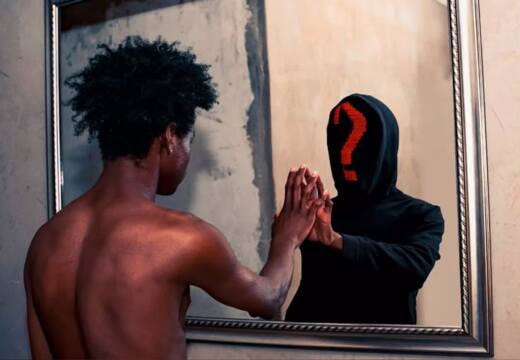

Human progress is inseparable from the revision of what we once called truth. Across history, ideas once defended with absolute certainty have been modified, refined, or abandoned altogether. Today, supported by extensive scientific evidence, we accept that the Earth is spherical. Yet this was not always universally held. The evolution of such beliefs does not merely reflect advances in knowledge; it reveals something deeper about the nature of truth itself, namely, that human understanding is provisional.
Knowledge grows, methods improve, and evidence accumulates. What seemed incontrovertible decades ago may no longer withstand scrutiny today. The problem, however, is not that truth evolves. The real danger lies in our tendency to treat current conclusions as final.
Psychology offers a useful concept here: metacognition, the ability to think about one’s own thinking. At its core, metacognition asks us to examine not only what we believe, but why we believe it and how those beliefs were formed. Few people routinely interrogate their assumptions. Even fewer examine the credibility of the sources that shaped them. Yet without this discipline, beliefs ossify into dogma, insulated from correction.
History provides sobering reminders of this fragility. For centuries, Isaac Newton’s laws of motion and gravity were regarded as definitive explanations of physical reality. They worked extraordinarily well, until Albert Einstein demonstrated that they were incomplete. Newton was not simply wrong; his framework functioned within certain limits. Einstein revealed those limits and expanded our understanding. This pattern, of partial truths giving way to fuller ones, runs throughout intellectual history.

The same is true, beyond physics. Many assume Charles Darwin originated the idea of evolution. Darwin’s contribution was to rigorously articulate and empirically support the theory of natural selection. The underlying idea of evolution existed long before him, explored by ancient thinkers such as: Anaximander, Empedocles, and Lucretius. Intellectual breakthroughs rarely emerge in isolation; they are cumulative, shaped by centuries of inquiry, debate, and revision.
Even philosophy, humanity’s most sustained attempt to understand truth, has limits. Socrates, the archetype of rational inquiry, famously declared that wisdom begins with knowing one’s ignorance. Still, he was condemned to death by the very society whose assumptions he challenged. His fate reminds us that truth is not determined solely by logic or reason, but by power, consensus, and cultural comfort. Rationality does not guarantee acceptance, nor does brilliance confer immunity from error or tragedy.
In the modern world, truth is often filtered through institutions: universities, journals, governments, and increasingly, technology platforms. Social media companies routinely censor information they deem to be misinformation, especially during global crises. While such measures may be motivated by public safety, they raise critical questions: Who decides what qualifies as truth? What criteria are used, and how accountable are those arbiters?
Similarly, students are discouraged from citing sources like Wikipedia, not because it is always inaccurate, but because it lacks formal scholarly oversight. This distinction matters. Credibility is not merely about content, but about methodology, transparency, and accountability. The implication is clear: no system of knowledge is immune to error.
This brings us to a deeply personal question: what principles govern your life? What version of truth shapes your decisions, your ethics, and your sense of meaning? These are not abstract concerns. They influence how we reason, whom we trust, and what we defend.
Is there such a thing as absolute truth? Philosophers, theologians, and scientists have debated this for centuries. While answers vary, one practical conclusion remains undeniable: before adopting any worldview, it must be examined. Intellectual inquiry is not rebellion; it is responsibility. Popularity does not guarantee accuracy, and consensus does not equate to correctness.
Franz Kafka once warned against editing one’s soul to fit prevailing fashions. To think independently, to question dominant narratives and inherited beliefs requires courage. As the poet Czesław Miłosz observed, in an environment of collective silence, a single honest statement can sound explosive. Truth unsettles. It disrupts comfort. That is precisely why it matters.
Stay in the loop with exclusive news, stories, and insights—delivered straight to your inbox. No fluff, just real content that matters. Sign up today!