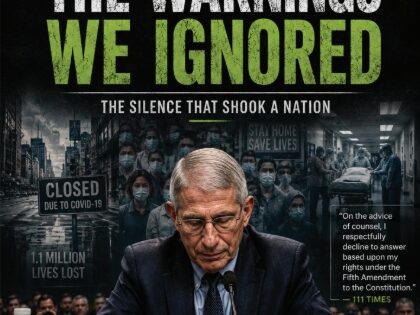



The government has one job. It’s a broad responsibility, but its purpose is singular: to be prepared. Whether local, provincial, or national, a government’s duty is to anticipate risk. It must look at every plausible scenario and ask one simple question: What if?
What if there is a flood, a food shortage, an earthquake, or a drought? What if global conflict disrupts supply chains? What if an ally becomes an economic rival?
Governments do study these possibilities, through intelligence agencies, academic research, and scientific communities, but awareness alone is not preparation. The issue isn’t whether risks are known; it’s whether they are acted upon. Too often, they are not.
Challenges emerge daily, and many are predictable with enough attention and foresight. Yet governments frequently become consumed by short-term political priorities, sidelining long-term risk planning. The result is a pattern of delayed responses to foreseeable crises.
The COVID-19 pandemic exposed this failure clearly. Its impact could have been mitigated with faster action and better preparedness. Public health guidance: distance, masks, hand hygiene, was simple and widely understood. The scientific community had warned of a global pandemic for decades. Still, governments hesitated. They were too busy advancing their careers and spending taxpayers’ money elsewhere.

Preparation requires investment before a crisis hits. Instead, many governments default to optimism, hoping for the best rather than planning for the worst. That mindset leaves systems exposed when predictable emergencies become reality. Consider Ontario’s significant public investment in electric vehicle manufacturing. Billions have been allocated to attract battery and vehicle plants, but what safeguards are in place if those companies relocate? Are there enforceable agreements to protect public funds? Are contingency plans ready for displaced workers?
These are not hypothetical concerns. Corporate mobility is a known risk. Responsible governance demands contracts, protections, and alternative strategies before investments are made, not after they fail.
Preparedness also defines how quickly a government can respond in a crisis. Democracies, by design, often move more slowly than authoritarian systems. Decision-making involves process, debate, and cost analysis. While these checks are essential, they can delay urgent action when speed matters most. Still, the core responsibilities remain unchanged: maintain order, protect citizens’ rights, and promote public welfare. These obligations require readiness.
There are existing frameworks to fight wildfires, manage floods, and respond to emergencies. The challenge is prioritization. Funding is frequently cited as a limitation, yet governments continue to allocate vast resources to areas with greater political visibility: defense spending, large-scale innovation projects, and initiatives with immediate public appeal. Programs that quietly protect lives often struggle for the same level of support.
This reflects a deeper issue: political incentives. Projects that generate attention tend to advance, while essential but less visible preparedness measures are deferred. As a result, governments risk appearing proactive while remaining structurally unprepared.
Democracy’s strength lies in accountability, but it can also be its weakness when leadership is driven more by optics than obligation. So, the question remains: what should citizens expect? Is it enough to accept reactive governance, or should preparedness be the standard by which leadership is judged?
Governments are not meant to be surprised by predictable crises. Their role is to anticipate, plan, and act, before the damage is done. The public, in turn, must decide whether that standard is being met.
Stay in the loop with exclusive news, stories, and insights—delivered straight to your inbox. No fluff, just real content that matters. Sign up today!