



Connect with us

Subscribe

Subscribe

Health & Wellness

Too many pills, too little thought

“Does this patient truly need this drug?”

A few weeks ago, I wrote about hip fractures in the elderly. I did not disclose at the time I had someone specific in mind: my 93-year-old mother, Mrs. Gifford-Jones, wife of the late Dr. W. Gifford-Jones. I chose not to mention it then because hip fractures at that age are no small matter. They can mark the beginning of a rapid downward spiral from which many seniors never recover. My focus, and hers, needed to be on her immediate care.

Happily, I can now report better news. My mother underwent surgery, completed rehabilitation, and is back home recovering remarkably well. At 93, that is no small victory, but an element of her recovery has sparked our frustration with the medical community. We have a medical culture that now seems incapable of imagining treatment without reaching first, second, and third for another prescription.

Doctors are not asking, “Does this patient truly need this drug?” There is a term for this phenomenon: polypharmacy. It refers to the routine prescribing of multiple medications, particularly in elderly patients, often without sufficient consideration of how those drugs interact, whether they remain necessary, or whether the patient even wants them.

What stunned me was not merely the number of prescriptions. It was the absence of consultation with a very smart patient and four adult children.

No one asked about my mother’s health philosophy. No one discussed risks versus benefits. No one explored what quality of life meant to a 93-year-old woman. No one contacted the family physician. Decisions simply appeared as prescriptions and blister packs stuffed with pills.

There were new medications for heart function. Four of them. There were antidepressants. There were painkillers galore, and the horror, there was a statin, which would have had my father rolling over in his grave, given his life’s work to promote a natural alternative. See giffsown.ca to learn more about that.

Nutritional and vitamin support? Not what one would hope.

Pharmaceuticals should not be the main event in protecting health. Instead, at any age, nutrition, exercise and mobility, family involvement, and human judgment should be the primary concerns. For the elderly, problems such as those faced by my mother should result in rehabilitation, not drugs, drugs, drugs.

Read the warnings on drugs, and it should be observed that they can increase risks. Drug interactions. Dizziness. Falls. Confusion. Sedation. Memory problems. Constipation. Loss of appetite. Liver stress. Kidney stress. Dangerous drops in blood pressure. Reduced mobility. Reduced quality of life.

One of the great ironies is that many seniors are hospitalized not simply because of disease, but because of adverse drug reactions from the medications prescribed to help them.

My father used to joke that one doctor gives you a pill for a headache, another gives you a pill for the side effects, and before long nobody remembers what the first pill was for, but he would not be laughing now.

A 93-year-old patient is not merely a collection of lab values and risk calculations. She is a human being with a history, preferences, tolerances, priorities, and dignity.

What matters may not be another theoretical percentage reduction in cardiovascular risk ten years down the road. It may be walking independently to the kitchen. Sleeping well. Remaining mentally sharp. Enjoying grandchildren. Avoiding dizziness. Preserving appetite. Maintaining dignity.

My mother survived the fracture. She survived the surgery. She survived rehabilitation. What concerns me now is whether modern medicine has become incapable of recognizing when enough treatment is enough. Physicians once prided themselves on judgment. Today, too many seem conditioned to prescribe first and pass entirely on reflection.

This column offers opinions on health and wellness, not personal medical advice.

Newsletter Signup

Stay in the loop with exclusive news, stories, and insights—delivered straight to your inbox. No fluff, just real content that matters. Sign up today!


Dr. W. Gifford-Jones, MD is a graduate of the University of Toronto and the Harvard Medical School. He trained in general surgery at Strong Memorial Hospital, University of Rochester, Montreal General Hospital, McGill University and in Gynecology at Harvard. His storied medical career began as a general practitioner, ship’s surgeon, and hotel doctor. For more than 40 years, he specialized in gynecology, devoting his practice to the formative issues of women’s health. In 1975, he launched his weekly medical column that has been published by national and local Canadian and U.S. newspapers. Today, the readership remains over seven million. His advice contains a solid dose of common sense and he never sits on the fence with controversial issues. He is the author of nine books including, “The Healthy Barmaid”, his autobiography “You’re Going To Do What?”, “What I Learned as a Medical Journalist”, and “90+ How I Got There!” Many years ago, he was successful in a fight to legalize heroin to help ease the pain of terminal cancer patients. His foundation at that time donated $500,000 to establish the Gifford-Jones Professorship in Pain Control and Palliative Care at the University of Toronto Medical School. At 93 years of age he rappelled from the top of Toronto’s City Hall (30 stories) to raise funds for children with a life-threatening disease through the Make-a-Wish Foundation.  Diana Gifford-Jones, the daughter of W. Gifford-Jones, MD, Diana has extensive global experience in health and healthcare policy.  Diana is Special Advisor with The Aga Khan University, which operates 2 quaternary care hospitals and numerous secondary hospitals, medical centres, pharmacies, and laboratories in South Asia and Africa.  She worked for ten years in the Human Development sectors at the World Bank, including health policy and economics, nutrition, and population health. For over a decade at The Conference Board of Canada, she managed four health-related executive networks, including the Roundtable on Socio-Economic Determinants of Health, the Centre for Chronic Disease Prevention and Management, the Canadian Centre for Environmental Health, and the Centre for Health System Design and Management. Her master’s degree in public policy at Harvard University’s Kennedy School of Government included coursework at Harvard Medical School.  She is also a graduate of Wellesley College.  She has extensive experience with Canadian universities, including at Carleton University, where she was the Executive Director of the Global Academy. She lived and worked in Japan for four years and speaks Japanese fluently. Diana has the designation as a certified Chartered Director from The Directors College, a joint venture of The Conference Board of Canada and McMaster University.  She has recently published a book on the natural health philosophy of W. Gifford-Jones, called No Nonsense Health – Naturally!

Click to comment

Leave a Reply

Your email address will not be published. Required fields are marked *

Trending

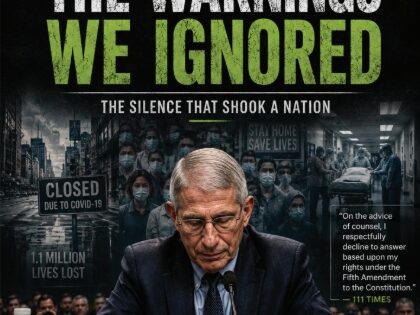
The Warnings We Ignored

Featured Cover Story

What It Means to Be a Lifelong Supporter: Larry Weltman on Loyalty, Community, and the Beautiful Game

Sports

Sharon Marley Reclaims Her Voice

Women Empowered

Toronto Collides Into New Culture

Entertainment

Advertisement
Newsletter Signup

Stay in the loop with exclusive news, stories, and insights—delivered straight to your inbox. No fluff, just real content that matters. Sign up today!
Legal and Advertising Disclaimer: Advertisements, sponsored content, business listings and other promotional materials are supplied by third parties. Their publication does not constitute an endorsement, recommendation, representation, warranty or guarantee by TCN Now Inc. Advertisers and content providers are responsible for the accuracy, legality and substantiation of their claims and for obtaining all necessary copyright, trademark, privacy and other permissions. To the fullest extent permitted by law, TCN Now Inc., its directors, officers, employees, contractors and affiliates shall not be liable for any loss, damage, cost, expense or claim arising from third-party advertisements, products, services or promotional content. TCN Now Inc. reserves the right to refuse, edit, suspend or remove advertising or promotional content at its discretion. Editorial and Content Disclaimer: The opinions, commentary and viewpoints expressed in signed articles, columns, letters, guest submissions and other contributor content belong to the respective authors and do not necessarily reflect the opinions or views of TCN Now Inc., its directors, officers, employees, editors or affiliates. Content published by TCN Now Inc. is provided for general informational purposes only and is not intended as legal, financial, medical or other professional advice. While reasonable efforts are made to ensure accuracy, TCN Now Inc. does not guarantee that all information will be complete, current or free from error. To the fullest extent permitted by law, TCN Now Inc. disclaims liability for losses or claims arising from reliance upon contributor opinions, third-party submissions or general informational content. Copyright © 2026 TCN Now Inc. All rights reserved. Unless otherwise stated, the text, photographs, graphics, logos, designs and other original content appearing on this website are owned by or licensed to TCN Now Inc. and may not be copied, reproduced, republished, distributed, modified or commercially used without prior written permission, except as otherwise permitted by law. Third-party names, logos, trademarks and content remain the property of their respective owners.

Connect
Newsletter Signup

Stay in the loop with exclusive news, stories, and insights—delivered straight to your inbox. No fluff, just real content that matters. Sign up today!