


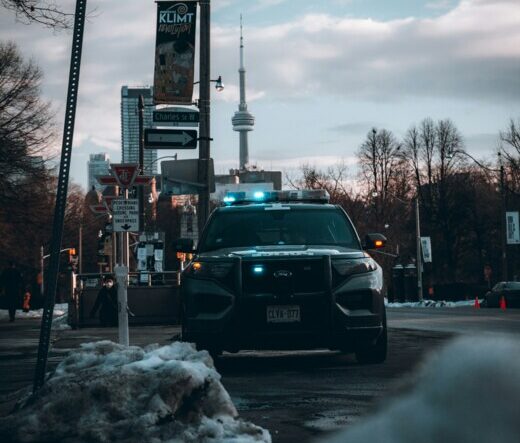

For generations, Canadians were taught to see police officers as symbols of safety, order, and protection. Today, that certainty has fractured. Across the country, from major urban centres to isolated rural communities, public trust in policing is increasingly marked by doubt, hesitation, and unease. Canadians are questioning whether the institution itself serves all citizens fairly and equally.
High-profile cases involving racism, sexism, excessive force, and institutional failure have transformed what was once isolated criticism into a broader national conversation about accountability, power, and public safety. The issue is whether Canadians still believe the system deserves their trust.
The roots of mistrust are not difficult to identify. Conversations surrounding sexism and racism have not only focused on police interactions with the public, but also on the culture that has existed within police forces themselves. Reports of harassment, discrimination, exclusion, and toxic workplace environments have surfaced repeatedly. When an institution struggles with fairness internally, many citizens naturally question whether fairness exists externally.
There is also a persistent perception that suspicion is not applied equally. People of colour are too often viewed first through the lens of risk rather than citizenship. Newcomers to Canada, people learning English while adapting to a new country and culture, can find themselves treated with caution or distrust simply because they communicate differently or appear unfamiliar. Whether intentional or not, these encounters reinforce the belief that policing does not feel the same for everyone.
The not-so-distant history of modern policing in North America has only deepened that mistrust. The killing of George Floyd became a global symbol of police brutality and institutional failure. In Canada, the Starlight Tours (incidents in which Indigenous people in Prairie provinces were allegedly detained by police and abandoned outside city limits in freezing temperatures) remain one of the country’s most disturbing examples of dehumanization and systemic neglect. The failures surrounding serial killer Robert Pickton exposed devastating indifference toward vulnerable women in Vancouver’s Downtown East side, many of whom were Indigenous, poor, or struggling with addiction. The public was left asking how so many warning signs could have been ignored for so long.
For many Canadians, these were not isolated mistakes. They became evidence of a pattern in which vulnerable people often received less urgency, less protection, and less dignity.
Everyday policing also contributes to the divide. In large cities, police frequently arrive in overwhelming numbers: several cruisers, flashing lights, tactical posture, and visible readiness for confrontation. Even before a conversation begins, the situation can feel escalated. A domestic dispute, mental health crisis, or neighbourhood conflict can quickly become an intimidating display of authority and force.
The optics matter because human behaviour responds to tension. When officers approach with hands near weapons, voices amplified, and sirens blaring, people become defensive. Fear rises. Encounters become adversarial before any effort at understanding or de-escalation has begun. Citizens are left wondering whether the goal is to calm a situation or dominate it.

Meanwhile, rural Canada experiences a vastly different form of policing. In many small communities, police presence is almost invisible outside of accidents, emergencies, or the occasional monthly drive-through. Residents may go weeks without seeing an officer at all. When incidents do occur, response times can be long, and relationships between police and communities may feel distant or purely transactional. Rural citizens can feel both under-protected and over-scrutinized at the same time.
This contradiction exposes a deeper issue: Canadians are no longer certain what policing is supposed to be. Are police peacekeepers? Crisis negotiators? Social workers? Law enforcers? Public guardians? Increasingly, officers are expected to perform all of these roles simultaneously. Yet, many are trained primarily for command, control, and enforcement. That mismatch creates tension in situations involving addiction, homelessness, mental illness, domestic disputes, or youth intervention, situations that often require patience, communication, and empathy more than force projection.
The comparison with other professions is striking. In Canada, a kindergarten teacher will often complete at least five years of post-secondary education and supervised training before entering a classroom. Society rightly expects teachers to understand child development, communication, emotional regulation, and safety before they are entrusted with young children.
Yet police officers, who may carry firearms, engage in dangerous driving, intervene in violent confrontations, make life-altering legal decisions, and respond to mental health crises, often complete their core training in a dramatically shorter period.
That disparity raises uncomfortable but necessary questions. If society demands years of preparation before someone can guide a classroom of children, why are we comfortable providing far less preparation to individuals entrusted with lethal force, public authority, and high-pressure intervention? Is the issue inadequate training? The wrong type of training? Or a system that prioritizes rapid deployment over deeper preparation and community connection?
To be fair, policing has changed. Police forces today are more diverse than they once were. Women serve in greater numbers. Officers from diverse cultural backgrounds are increasingly represented. Recruitment campaigns now emphasize inclusion, empathy, and community engagement. These are meaningful and necessary changes, but diversity alone cannot repair institutional mistrust.
People do not judge policing by recruitment posters or public relations campaigns. They judge it through lived experience. They judge it by whether justice appears equal. They judge it by how officers behave when emotions are high, and tensions are raw.
None of this means police officers are villains. Most are ordinary people working in difficult and unpredictable circumstances, but institutions cannot depend solely on the good intentions of individuals. Public trust depends on fairness, accountability, restraint, and humanity.
Communities want police to make situations safer. Those are not always the same thing. If trust is to be rebuilt, policing in Canada must move beyond reaction and toward relationship. De-escalation must become the defining philosophy of public safety. Accountability must be visible rather than hidden behind internal investigations, and governments must recognize that not every social problem should be answered by an armed response.
The uniform alone no longer guarantees public confidence. Trust now must be earned encounter by encounter, community by community. Until that happens, the uncertainty surrounding policing in Canada will remain. Canadians are still searching for a version of it they can fully believe in again.
Stay in the loop with exclusive news, stories, and insights—delivered straight to your inbox. No fluff, just real content that matters. Sign up today!