


The government has one core responsibility. It’s a broad mandate, but its purpose is singular: to be prepared.
At every level: local, regional, national, government exists to anticipate risk and respond effectively. That means asking one essential question, over and over: what if? What if there is a flood, a food shortage, an earthquake, a tornado, a hurricane, or a drought? What if geopolitical alliances shift and a former ally becomes an economic rival? Preparedness begins with this mindset.
To be fair, governments do study potential crises. Intelligence agencies, academic institutions, and scientific communities generate forecasts and models. Early warnings are rarely absent. The problem is not a lack of information. Too often, competing priorities: political ambition, short-term optics, or pet projects, crowd out long-term risk planning.
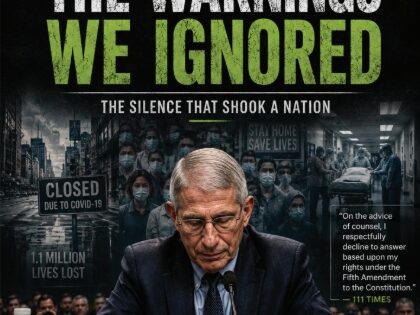
The COVID-19 pandemic exposed this gap. Public health experts had warned for decades that a global pandemic was not a matter of if, but when. Yet, stockpiles were insufficient, response plans uneven, and communication inconsistent. Basic measures: masking in high-risk settings, physical distancing, and hand hygiene, were widely known but unevenly implemented early on. Instead of always hoping for the best, our governments should have been preparing for the worst. The result was avoidable strain on health systems, economies, and communities.
This pattern extends beyond public health. Consider large-scale economic incentives, such as government funding for electric vehicle manufacturing. Ontario, for example, has committed significant public funds to attract battery and vehicle plants. These investments may create jobs and accelerate the energy transition, but prudent governance requires asking hard questions upfront: What protections are in place if companies scale back or leave? Are there enforceable agreements to safeguard public investment? What contingency plans exist for workers if projects stall? Preparedness is responsible stewardship.
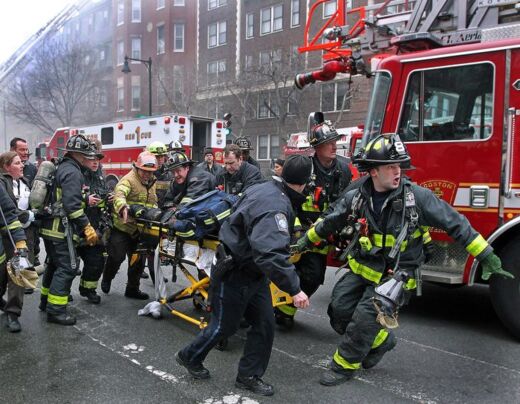
At its foundation, the government is tasked with maintaining order, protecting rights, and promoting the general welfare. That includes readiness for emergencies. Yet, response times in democratic systems can be slow, constrained by process, cost considerations, and political calculation. By contrast, more centralized systems can act quickly in crises, though often without the same accountability or safeguards. Speed alone is not the goal; effective, timely, and accountable action is.

There is no shortage of plans for fighting wildfires, mitigating floods, or coordinating disaster response. The recurring barrier is prioritization. Officials often cite limited resources, yet governments routinely mobilize vast sums for defense or high-visibility initiatives. The issue is less about absolute scarcity and more about allocation and incentives. Programs that quietly prevent harm rarely deliver immediate political rewards. As a result, essential preparedness can be underfunded.
This points to a structural weakness: democracies sometimes struggle to hold leaders accountable for risks that have not yet materialized. Preventive action is, by definition, invisible when it succeeds. Still, the cost of inaction becomes painfully visible when systems fail.
Preparedness is not abstract. It requires contracts that protect public investment, supply chains that can surge in emergencies, clear communication protocols, and leadership willing to act before a crisis peaks. It also requires cultural discipline, treating “what if” as a standing obligation, not an occasional exercise.
Ultimately, public expectations matter. Citizens have the right to demand competent, forward-looking governance. That includes transparency about risks, clarity about trade-offs, and evidence that lessons from past failures have been incorporated into current policy.
If the government’s first job is to be prepared, then preparedness must be visible in budgets, contracts, infrastructure, and response times, not just in reports. The question is when crises come, will we be ready?
Stay in the loop with exclusive news, stories, and insights—delivered straight to your inbox. No fluff, just real content that matters. Sign up today!