

Connect with us

Subscribe

Subscribe

Your Health

An apple a day, keeps the waistline away

BY W. GIFFORD- JONES MD & DIANA GIFFORD-JONES

As this long period of isolation eases, are you noticing your friends and neighbours have put on weight around their middles?  How unfortunate. It is if the coronavirus crisis piles on additional chronic health problems for individuals and society due to weight gain, or what has come to be known as metabolic syndrome.

The World Health Organization defines metabolic syndrome as a new non-communicable disease characterized by: abdominal obesity, insulin resistance, high blood pressure, and high blood fats. To make the diagnosis, doctors measure the waistline, blood pressure, and glucose, triglyceride, and cholesterol levels.  The risk of metabolic syndrome is a progression to Type 2 diabetes. The prescription to avert this preventable disease is to lose the extra weight through exercise and diet – and then smart weight management for life.

During these days when it is challenging to get an appointment with your doctor, you can measure your middle to learn if you might have a problem.  For men, beware of more than 40 inches around the waistline. For women, it’s 35 inches. And there’s a reason the waistline is the target of attention.  Distinct from subcutaneous fat that is immediately under your skin, visceral fat gathers around your vital organs.  Visceral fat is more dangerous than other fat because it increases the risk not only for diabetes but also for heart disease, stroke, and Alzheimers.

So, what can you do?  You can start by changing your daily routine so that you can lose any weight you may have gained while in isolation.  And if you need some help, look to Mother Nature and try her natural remedies first.

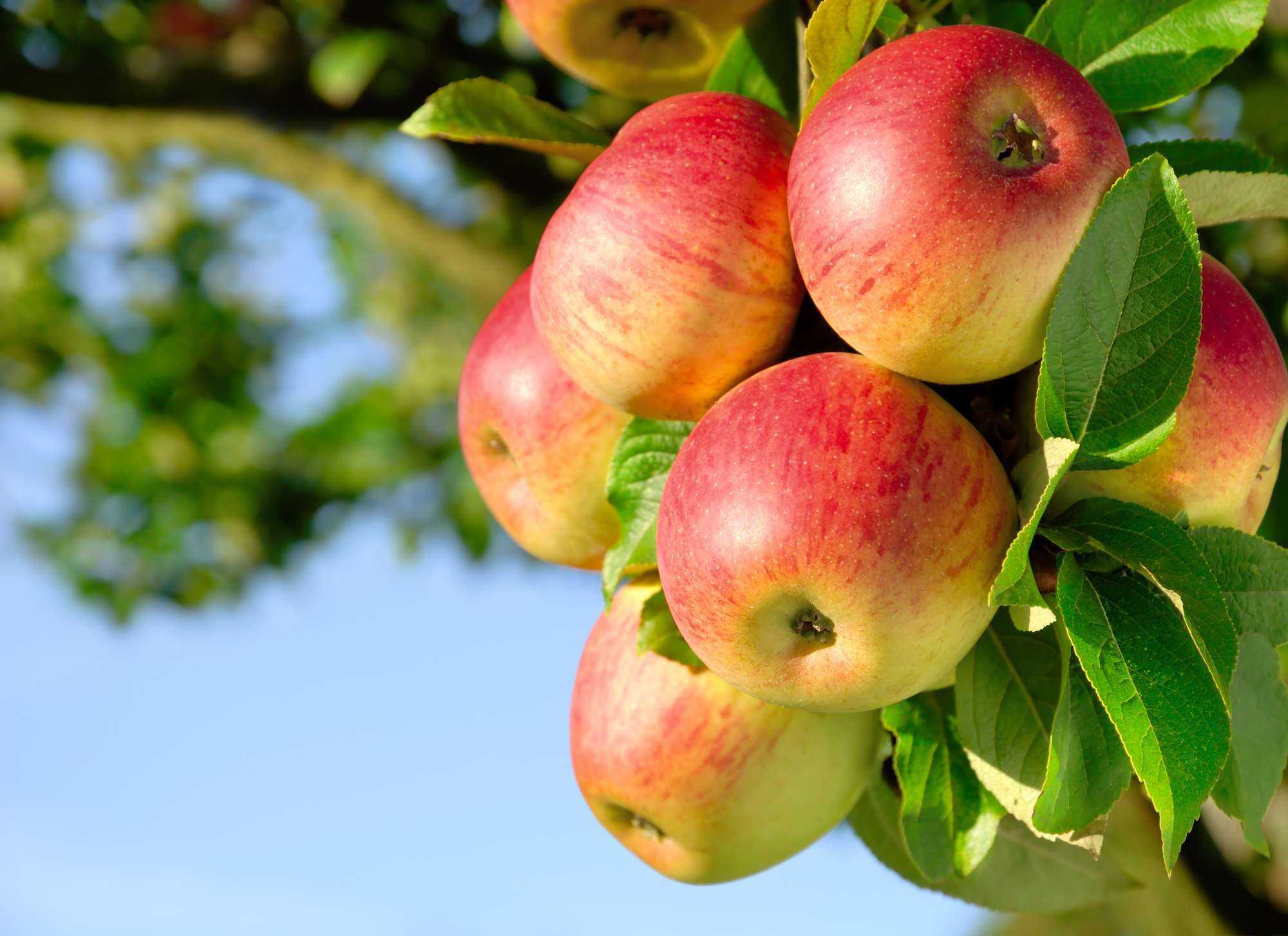
One example is the wholesome apple.  It’s been long celebrated as a healthy choice, and for good reason.  New research on apple polyphenols has shown promise in helping reduce visceral fat.

Apple polyphenols are micronutrients packed with antioxidants that help with digestion.  Look for them in natural supplements like AppleSlim that help with weight management. Researchers in Japan have conducted clinical trials showing that apple polyphenols extracted from unripe apples grown in Central Asia, reduced visceral fat by 9% over 12 weeks in a cohort of overweight or obese study participants, as compared to a similar group offered a placebo.  These results were measured using CT scans, as losing weight through diet and exercise can build up muscle, which is heavier than fat, making number of pounds lost a potentially misleading measure on its own.

What exactly are the apple polyphenols doing to help?  They are influencing the way your body absorbs food in your diet and transports fats to tissues.  Apple polyphenols block the enzymes that break down fats and glucose, leaving them to pass through your system and out the other end.

The benefits go beyond a reduction in visceral fat. Animal research shows that apple polyphenols promote longevity.  Large epidemiological studies have shown that populations consuming high quantities of polyphenols have lower rates of disease.

Weight management is of necessity a personal matter, best achieved with one’s own grit or with the help of supplements. But there are societal changes we can and should make too, and no better time than now, while the pandemic offers us the opportunity of a rethink.  We need to design our cities and neighbourhoods better, so that people walk or cycle more and drive less.  Exercise programs need to be deliberately structured in our schools and workplaces, and health promotion policies should encourage investments in exercise facilities and spaces. Governments and firms need to make healthy food more affordable and convenient.  And we need to get creative in how we incentivize people – especially young people – to value healthy choices.

If you want a good place to start, make a visit to your local health food store.  You will find people there who understand health promotion and disease prevention.  It is a good bet that they would know more about the health benefit of apple polyphenols than the next medical specialist you see.

Newsletter Signup

Stay in the loop with exclusive news, stories, and insights—delivered straight to your inbox. No fluff, just real content that matters. Sign up today!


Dr. W. Gifford-Jones, MD is a graduate of the University of Toronto and the Harvard Medical School. He trained in general surgery at Strong Memorial Hospital, University of Rochester, Montreal General Hospital, McGill University and in Gynecology at Harvard. His storied medical career began as a general practitioner, ship’s surgeon, and hotel doctor. For more than 40 years, he specialized in gynecology, devoting his practice to the formative issues of women’s health. In 1975, he launched his weekly medical column that has been published by national and local Canadian and U.S. newspapers. Today, the readership remains over seven million. His advice contains a solid dose of common sense and he never sits on the fence with controversial issues. He is the author of nine books including, “The Healthy Barmaid”, his autobiography “You’re Going To Do What?”, “What I Learned as a Medical Journalist”, and “90+ How I Got There!” Many years ago, he was successful in a fight to legalize heroin to help ease the pain of terminal cancer patients. His foundation at that time donated $500,000 to establish the Gifford-Jones Professorship in Pain Control and Palliative Care at the University of Toronto Medical School. At 93 years of age he rappelled from the top of Toronto’s City Hall (30 stories) to raise funds for children with a life-threatening disease through the Make-a-Wish Foundation.  Diana Gifford-Jones, the daughter of W. Gifford-Jones, MD, Diana has extensive global experience in health and healthcare policy.  Diana is Special Advisor with The Aga Khan University, which operates 2 quaternary care hospitals and numerous secondary hospitals, medical centres, pharmacies, and laboratories in South Asia and Africa.  She worked for ten years in the Human Development sectors at the World Bank, including health policy and economics, nutrition, and population health. For over a decade at The Conference Board of Canada, she managed four health-related executive networks, including the Roundtable on Socio-Economic Determinants of Health, the Centre for Chronic Disease Prevention and Management, the Canadian Centre for Environmental Health, and the Centre for Health System Design and Management. Her master’s degree in public policy at Harvard University’s Kennedy School of Government included coursework at Harvard Medical School.  She is also a graduate of Wellesley College.  She has extensive experience with Canadian universities, including at Carleton University, where she was the Executive Director of the Global Academy. She lived and worked in Japan for four years and speaks Japanese fluently. Diana has the designation as a certified Chartered Director from The Directors College, a joint venture of The Conference Board of Canada and McMaster University.  She has recently published a book on the natural health philosophy of W. Gifford-Jones, called No Nonsense Health – Naturally!

Click to comment

Leave a Reply

Your email address will not be published. Required fields are marked *

Trending

The Warnings We Ignored

Featured Cover Story

What It Means to Be a Lifelong Supporter: Larry Weltman on Loyalty, Community, and the Beautiful Game

Sports

Sharon Marley Reclaims Her Voice

Women Empowered

Toronto Collides Into New Culture

Entertainment

Advertisement
Newsletter Signup

Stay in the loop with exclusive news, stories, and insights—delivered straight to your inbox. No fluff, just real content that matters. Sign up today!

Legal and Advertising Disclaimer: Advertisements, sponsored content, business listings and other promotional materials are supplied by third parties. Their publication does not constitute an endorsement, recommendation, representation, warranty or guarantee by TCN Now Inc. Advertisers and content providers are responsible for the accuracy, legality and substantiation of their claims and for obtaining all necessary copyright, trademark, privacy and other permissions. To the fullest extent permitted by law, TCN Now Inc., its directors, officers, employees, contractors and affiliates shall not be liable for any loss, damage, cost, expense or claim arising from third-party advertisements, products, services or promotional content. TCN Now Inc. reserves the right to refuse, edit, suspend or remove advertising or promotional content at its discretion. Editorial and Content Disclaimer: The opinions, commentary and viewpoints expressed in signed articles, columns, letters, guest submissions and other contributor content belong to the respective authors and do not necessarily reflect the opinions or views of TCN Now Inc., its directors, officers, employees, editors or affiliates. Content published by TCN Now Inc. is provided for general informational purposes only and is not intended as legal, financial, medical or other professional advice. While reasonable efforts are made to ensure accuracy, TCN Now Inc. does not guarantee that all information will be complete, current or free from error. To the fullest extent permitted by law, TCN Now Inc. disclaims liability for losses or claims arising from reliance upon contributor opinions, third-party submissions or general informational content. Copyright © 2026 TCN Now Inc. All rights reserved. Unless otherwise stated, the text, photographs, graphics, logos, designs and other original content appearing on this website are owned by or licensed to TCN Now Inc. and may not be copied, reproduced, republished, distributed, modified or commercially used without prior written permission, except as otherwise permitted by law. Third-party names, logos, trademarks and content remain the property of their respective owners.

Connect
Newsletter Signup

Stay in the loop with exclusive news, stories, and insights—delivered straight to your inbox. No fluff, just real content that matters. Sign up today!