


There is a kind of homesickness that is both deeply personal and widely shared, especially among those who have left a place that carried not just geography, but culture, language, and a familiar way of life. For some, it is tied to a country or region that still exists on a map but feels increasingly distant in daily reality. For others, it becomes something harder to define: a longing not only for where they came from, but for when they came from. A quiet ache for a time when community felt closer, life moved more slowly, and the world felt more knowable than it does today.
For many immigrants and newcomers, this feeling carries a double weight. There is the visible absence: the streets left behind, the language once spoken daily, the rituals and celebrations that marked life. There is also something less tangible: even the back then we carry has begun to drift. Memory becomes both refuge and reconstruction, shaped as much by longing as by fact.
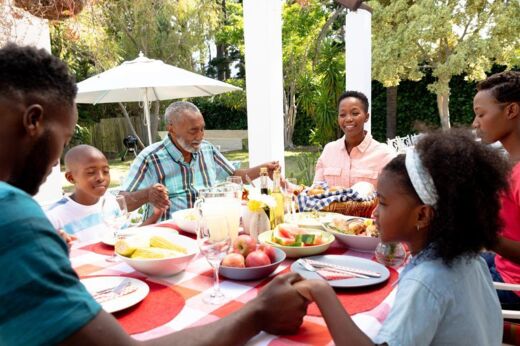
Across cultures, we hold onto similar anchors. We tell stories repeatedly, sometimes polishing them without meaning to. We sing songs that once filled kitchens, fields, and gatherings. We cook recipes that do not need measurements because they were learned by watching. We preserve celebrations that marked seasons and generations. These are how continuity is carried across distance and time.
Memory edits generously. It softens edges and quiets conflict. It leaves something warmer and more coherent than lived experience. Yet, it still holds truth. These fragments allow belonging to travel with us. They are portable pieces of home carried in language, taste, sound, and ritual.
Today, progress has given extraordinary tools. Information moves instantly. Distance is compressed into seconds. We can speak across oceans, maintain relationships across continents, and access more knowledge than any generation before us. These are profound gains that reshape belonging in a global world.
Progress has also changed the tempo of life. The world has gotten itself in one big hurry. Conversations are exchanges rather than lingering moments. Attention is divided. Community, once grounded in shared place and time, now competes with endless digital elsewhere. We are connected, but less rooted.
Still, the speed is not only technological; it is emotional. We move quickly through conversations, commitments, and even grief, as if slowing down might cause us to fall behind. The expectation of constant availability reshapes how we relate to one another, turning presence into something partial. In that acceleration, the ordinary acts of sitting together, listening without urgency, or simply being in the same space without distraction begin to feel almost countercultural. These small resistances become ways of reclaiming time itself in everyday life again in practice together slowly.

For those who have left a homeland, or even those watching hometowns change, this acceleration deepens dislocation. The past becomes something we return to repeatedly because it feels coherent. We preserve it in stories, songs, recipes, and traditions. These acts insist meaning should not vanish.
The place we miss is gone. Memories of simpler times reflect who we were within them. Life has expanded into complexity, decisions, uncertainty, growth, highs and lows.
We cannot return to earlier versions of ourselves. Even unchanged places would feel different because we are different. We carry accumulated experience everywhere we go.
So, what are we homesick for? Not a place, but coherence, a sense that life once made emotional sense. That belonging required no explanation. That time felt like something we moved with, not chased by. If so, the task is not return but recognition of what can be carried forward.
Community can be rebuilt in small ways: conversations not rushed, relationships not transactional, presence not divided. For immigrants, culture is evolution: stories, songs, recipes, celebrations living in new places.
The place we miss may not exist anymore, but the need: connection, belonging, continuity, remains. Homesickness is direction, pointing to what still matters, and if careful with what we carry, we can still build something like home.
Stay in the loop with exclusive news, stories, and insights—delivered straight to your inbox. No fluff, just real content that matters. Sign up today!