


Connect with us

Subscribe

Subscribe

Health & Wellness

The risks of falls and fractures

“The body achieves what the mind believes.”

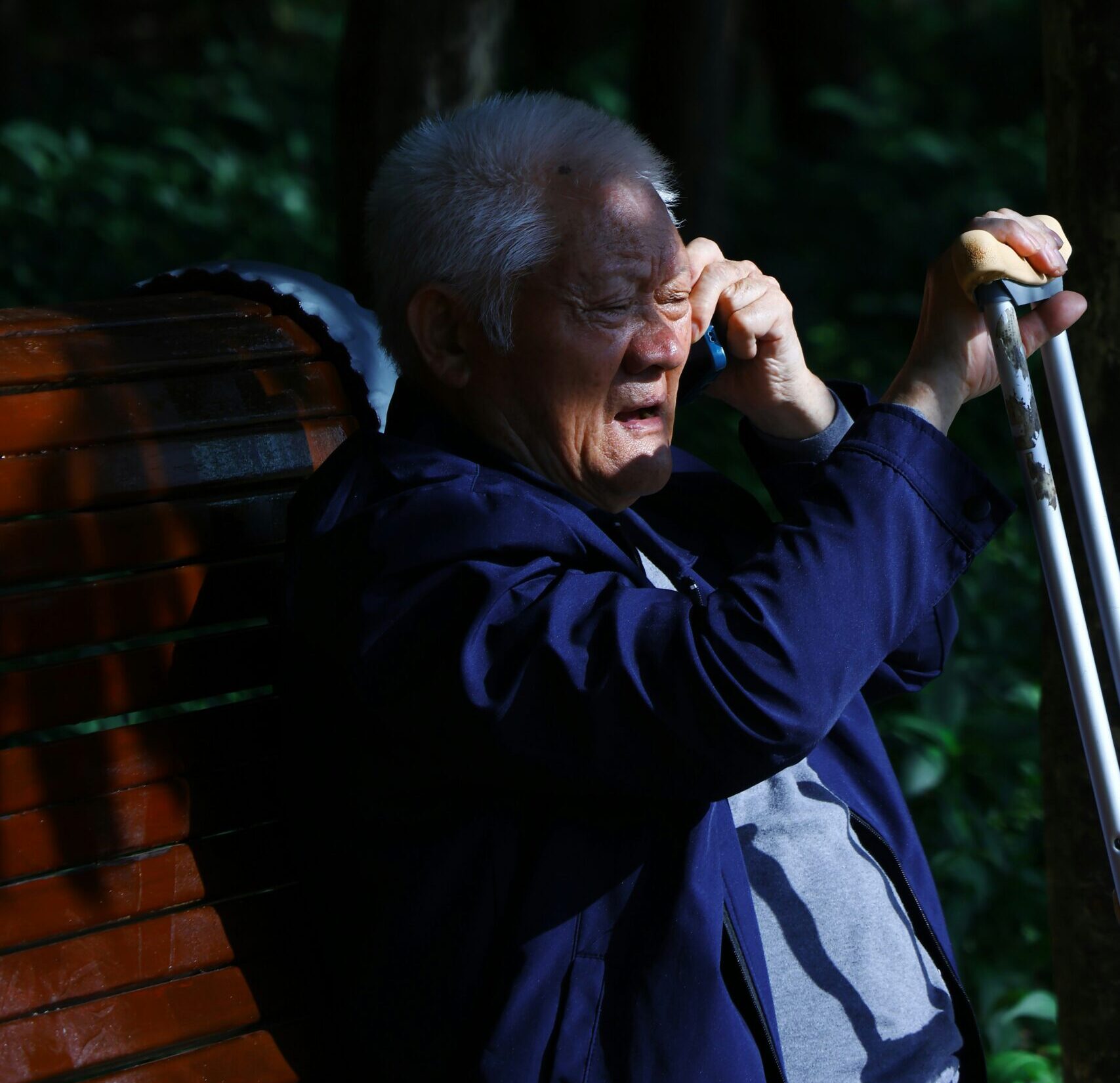
Photographer: Biki Z

No one wants to get that call. A loved one has taken a fall. There is always the hope that it will be just a bruise and shaken confidence, but when the ensuing emergency treatment confirms a fractured hip, it is time for everyone to bring out their best skills in patience.

Falls are, unfortunately, quite common, but their consequences are anything but trivial. Research published in journals such as the Journal of Bone and Mineral Research and the New England Journal of Medicine has long shown that a hip fracture in later life is no walk in the park.

Yet, the major risks associated with hip fractures are well known, and medical teams are trained to mitigate the ones that can cause problems while in the hospital. Hip fracture surgery has risks, but today, most people come through it. Four in five older adults survive the year following a hip fracture. Few will return to their previous level of mobility and independence, but a hip fracture today is not what it was forty years ago.

Dr. Mary Tinetti, Professor of Medicine at Yale University School of Medicine, has spent a career studying why people fall. One of her observations is that it is often the more active, capable older adult who sustains the most serious injuries. They move more quickly, take more chances, and neglect preventative measures.

Falling, she argues, is rarely due to a single cause. It is the result of slight changes accumulating over time. Vision becomes less dependable. Balance is easily lost. Medications interact. Muscles lose strength.

Some falls are preventable. The edges of rugs are a hazard, as is poor lighting. Showers, even with grab bars, are slippery places. Preventing a fall means slowing down so that every movement is a safe and steady one. Even with care, falls still happen.

The evidence of studies shows that frailty, rather than age, is the key determinant of rehabilitation outcomes. So, whether before, for prevention, or after a fall, for recovery, exercise is critical. That is why physiotherapy is standard practice for post-operative treatment. At any age, particularly after 50, experts agree that people should be engaged in resistance training 2-3 days a week, aerobic exercise at least three times a week, and balance training just as frequently.

Having professional physiotherapists to guide a program of exercise is ideal. Left to their own devices, people fail to do what is good for them. In the U.S., large-scale surveys show that even after encouragement, about 80 percent of people don’t meet the guidelines.

Getting started is not hard. Experts say that standing on one foot, then the other, while doing the dishes is one place to start. Slowly standing and sitting without using the arms is another good exercise.

Here is interesting news. In a longitudinal study of approximately seven hundred people who experienced a fall, researchers found that mindset matters. Independent of other crucial factors such as age, gender, and pre-fall physical function, people with positive self-perceptions of aging had significantly better outcomes as measured two years after their fall.

In sports psychology, there is an expression, “The body achieves what the mind believes.” Athletes understand. Kids too. It is just the older set that needs to internalize this.

So, have patience, and resolve if you are the unlucky victim of a fractured hip. It is a long road to recovery, but with careful and consistent exercise, and a healthy outlook, you can ensure your place in the group of people who come through the trauma.

Newsletter Signup

Stay in the loop with exclusive news, stories, and insights—delivered straight to your inbox. No fluff, just real content that matters. Sign up today!


Dr. W. Gifford-Jones, MD is a graduate of the University of Toronto and the Harvard Medical School. He trained in general surgery at Strong Memorial Hospital, University of Rochester, Montreal General Hospital, McGill University and in Gynecology at Harvard. His storied medical career began as a general practitioner, ship’s surgeon, and hotel doctor. For more than 40 years, he specialized in gynecology, devoting his practice to the formative issues of women’s health. In 1975, he launched his weekly medical column that has been published by national and local Canadian and U.S. newspapers. Today, the readership remains over seven million. His advice contains a solid dose of common sense and he never sits on the fence with controversial issues. He is the author of nine books including, “The Healthy Barmaid”, his autobiography “You’re Going To Do What?”, “What I Learned as a Medical Journalist”, and “90+ How I Got There!” Many years ago, he was successful in a fight to legalize heroin to help ease the pain of terminal cancer patients. His foundation at that time donated $500,000 to establish the Gifford-Jones Professorship in Pain Control and Palliative Care at the University of Toronto Medical School. At 93 years of age he rappelled from the top of Toronto’s City Hall (30 stories) to raise funds for children with a life-threatening disease through the Make-a-Wish Foundation.  Diana Gifford-Jones, the daughter of W. Gifford-Jones, MD, Diana has extensive global experience in health and healthcare policy.  Diana is Special Advisor with The Aga Khan University, which operates 2 quaternary care hospitals and numerous secondary hospitals, medical centres, pharmacies, and laboratories in South Asia and Africa.  She worked for ten years in the Human Development sectors at the World Bank, including health policy and economics, nutrition, and population health. For over a decade at The Conference Board of Canada, she managed four health-related executive networks, including the Roundtable on Socio-Economic Determinants of Health, the Centre for Chronic Disease Prevention and Management, the Canadian Centre for Environmental Health, and the Centre for Health System Design and Management. Her master’s degree in public policy at Harvard University’s Kennedy School of Government included coursework at Harvard Medical School.  She is also a graduate of Wellesley College.  She has extensive experience with Canadian universities, including at Carleton University, where she was the Executive Director of the Global Academy. She lived and worked in Japan for four years and speaks Japanese fluently. Diana has the designation as a certified Chartered Director from The Directors College, a joint venture of The Conference Board of Canada and McMaster University.  She has recently published a book on the natural health philosophy of W. Gifford-Jones, called No Nonsense Health – Naturally!

Click to comment

Leave a Reply

Your email address will not be published. Required fields are marked *

Trending

The Warnings We Ignored

Featured Cover Story

What It Means to Be a Lifelong Supporter: Larry Weltman on Loyalty, Community, and the Beautiful Game

Sports

Sharon Marley Reclaims Her Voice

Women Empowered

Toronto Collides Into New Culture

Entertainment

Advertisement
Newsletter Signup

Stay in the loop with exclusive news, stories, and insights—delivered straight to your inbox. No fluff, just real content that matters. Sign up today!
Legal and Advertising Disclaimer: Advertisements, sponsored content, business listings and other promotional materials are supplied by third parties. Their publication does not constitute an endorsement, recommendation, representation, warranty or guarantee by TCN Now Inc. Advertisers and content providers are responsible for the accuracy, legality and substantiation of their claims and for obtaining all necessary copyright, trademark, privacy and other permissions. To the fullest extent permitted by law, TCN Now Inc., its directors, officers, employees, contractors and affiliates shall not be liable for any loss, damage, cost, expense or claim arising from third-party advertisements, products, services or promotional content. TCN Now Inc. reserves the right to refuse, edit, suspend or remove advertising or promotional content at its discretion. Editorial and Content Disclaimer: The opinions, commentary and viewpoints expressed in signed articles, columns, letters, guest submissions and other contributor content belong to the respective authors and do not necessarily reflect the opinions or views of TCN Now Inc., its directors, officers, employees, editors or affiliates. Content published by TCN Now Inc. is provided for general informational purposes only and is not intended as legal, financial, medical or other professional advice. While reasonable efforts are made to ensure accuracy, TCN Now Inc. does not guarantee that all information will be complete, current or free from error. To the fullest extent permitted by law, TCN Now Inc. disclaims liability for losses or claims arising from reliance upon contributor opinions, third-party submissions or general informational content. Copyright © 2026 TCN Now Inc. All rights reserved. Unless otherwise stated, the text, photographs, graphics, logos, designs and other original content appearing on this website are owned by or licensed to TCN Now Inc. and may not be copied, reproduced, republished, distributed, modified or commercially used without prior written permission, except as otherwise permitted by law. Third-party names, logos, trademarks and content remain the property of their respective owners.

Connect
Newsletter Signup

Stay in the loop with exclusive news, stories, and insights—delivered straight to your inbox. No fluff, just real content that matters. Sign up today!