


BY SIMONE J. SMITH
My work in the community is two-fold: I am a journalist, and I am an educator. As a journalist, I have taken the time to discuss the detrimental effects that this pandemic has had on the world. I have explored lockdowns, vaccines and mask wearing. For the last ten months, I have focused on businesses, the crumbling of the economy, and I have spoken to specialists from around the world, all who have had their opinions on what this pandemic represents.
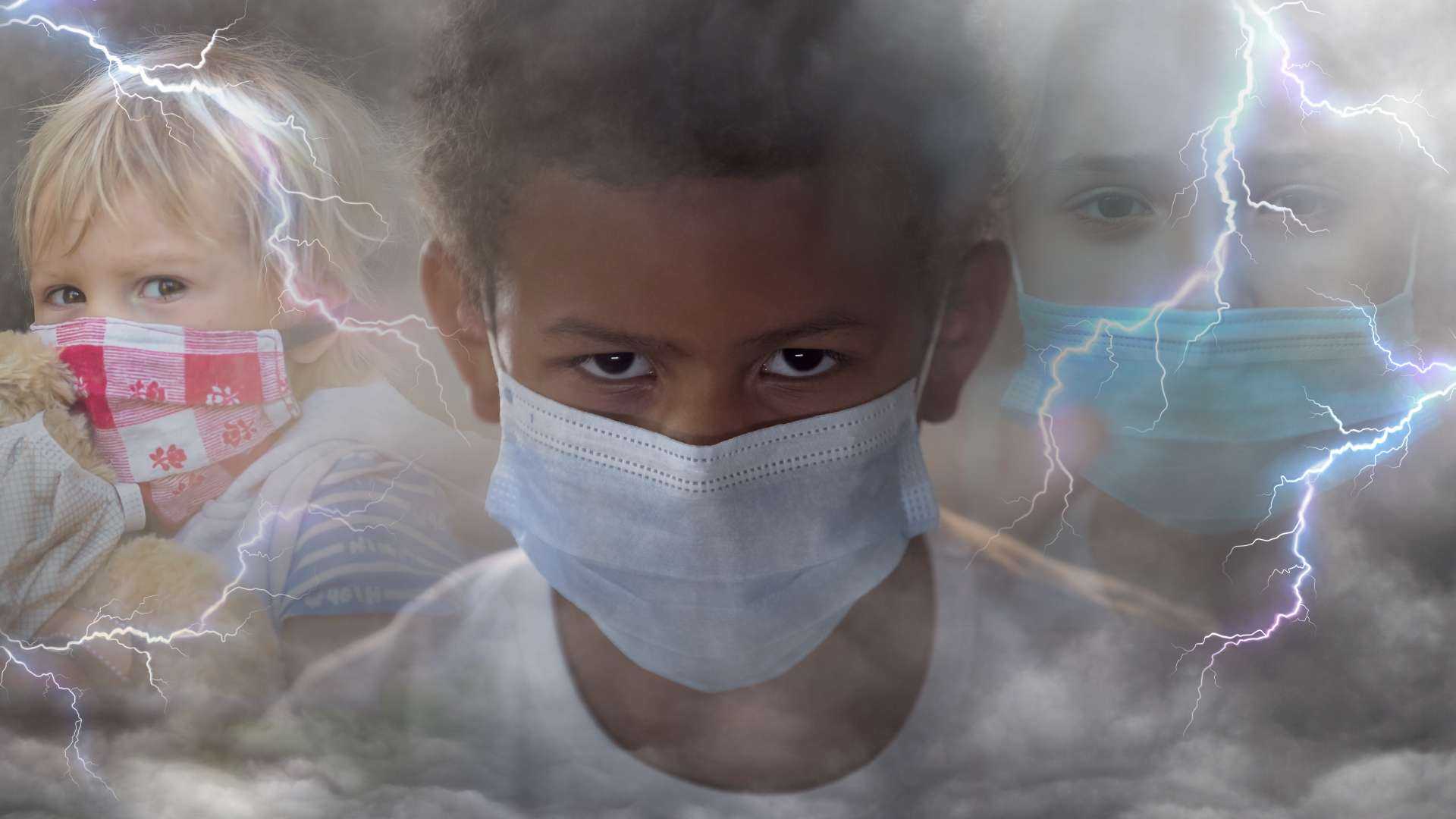
What I haven’t done is take the time to focus on who this pandemic is having the most devastating effect on: our children.
Each week, I sit down with one of my students (age range 11-19). I see the ups and downs in their moods. I have witnessed the complete emotional breakdowns. When I ask them about their days, they always bring up how much they miss their friends. I see that they tend to demonstrate a lack of interest in other humans; their eyes trained to their devices. I have also seen them using three devices at the same time.
I have witnessed single mothers who are fed up with online schooling that they are okay with saying, “We are just going to write this year off!” As surprised as I am by these statements, I also understand. This has been tough for everyone. Children are witnessing their parents go through mental breakdowns; one can only wonder how this is impacting them.
There is no conspiracy about this; our children are suffering, and just how much will not be known until it is tool late. I decided to do some digging to bring clarity to parents. My hope is that with a better understanding, parents will see the need to stand up to these lockdowns knowing that if we as adults are struggling with it, imagine what it must be like for them.

One of the only ways that the effects of this pandemic will be recognized is with extensive longitudinal studies. In a longitudinal study, researchers repeatedly examine the same individuals to detect any changes that may occur over a period of time. To date, longitudinal studies have been done on one aspect of this pandemic that seems to have a long-term effect on children. That crucial aspect is social isolation.
Current longitudinal findings about children who experienced social isolation were followed up to adulthood. The research suggested that social isolation has persistent and cumulative detrimental effects on adult health.
Humans are social beings. Social behaviour includes how an individual’s thoughts, feelings and behaviour influences, and is influenced by, other people. Creating and developing social relationships is central to human well being. Experiencing social behaviour, and engaging in social interaction, is vital during childhood development, however, for the last ten months, children have not been able to participate in, or experience the social behaviour that is necessary for their mental well-being and development.
For most children and adolescents, school is the most important social arena. This prolonged absence of social relationships has shown to affect child development in multiple ways. Previous research conducted by Lacey, Kumari & Bartley (2014) reveal that socially isolated children tend to have lower subsequent educational attainment, be part of a less advantaged social class in adulthood and are more likely to be psychologically distressed in adulthood.
In 2012, Makinodan, Rosen, Ito & Corfas did a study on young mice and monkeys. The mice and monkeys were socially isolated for several weeks. They wanted to further investigate the relationship between social isolation and physiological and cognitive functioning.
The researchers found deficits in the neuron-to-neuron (cell-to-cell) communication in the prefrontal cortex. The function of these cells is dependent on social interaction to develop the prefrontal cortex. The prefrontal cortex is a part of the brain that is associated with a variety of cognitive functions, such as: planning, higher-level thought, and social interaction. What they found was that if the development of these cells and areas of the brain are disrupted, children can also possibly develop deficits in this area of the brain.
I want to give you a complete breakdown on things that you as a parent may not have considered. Let’s take a look at the human stress response.
The primary function of the human stress response is to protect the body from the environment. As I have reiterated, a basic human need is social interaction, and when a person is socially isolated, the body will perceive the situation as a threat. The body will release these hormones so that the person can react towards the current stress. However, the body cannot continue to release these hormones; there is a limit. This increased stress response over an extended period of time has been proven to increase the risk of developing: cardiovascular disease, elevated blood pressure, infectious illness, cognitive deterioration, and mortality.
These findings are the first evidence linking childhood social isolation to poor adult health. They are consistent with a handful of retrospective studies reporting associations between chronic health conditions in adulthood and a perceived lack of social support in childhood.
There have been other studies that have brought disturbing evidence to light. There was a study commissioned by the B.C. Representative for Children and Youth. The results of the study demonstrated that long standing social and economic inequities in society could actually exacerbate mental health challenges.
Stay in the loop with exclusive news, stories, and insights—delivered straight to your inbox. No fluff, just real content that matters. Sign up today!