


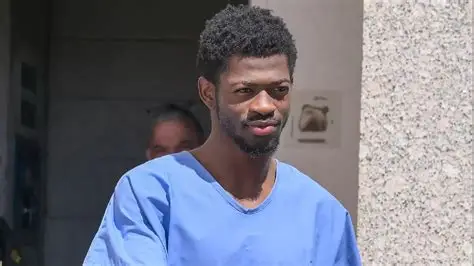

You are standing on a street corner, heart racing, mind spinning, and the first person who sees you does not call a doctor, they call the police. That is the brutal reality for too many African men in America, and the Lil Nas X case has ripped the curtain off a system that offers mercy only after a crisis. In August 2025, Montero Lamar Hill (known to the world as Lil Nas X) was arrested in Los Angeles on felony charges of battery on police officers and resisting an executive officer.
By April 2026, a judge granted him entry into a two-year mental-health diversion program, with charges potentially dismissed if he complies with treatment and stays out of trouble. The court accepted that his later-diagnosed bipolar disorder was a significant factor in the incident, calling his behaviour “Aberrant from his normal conduct.” Here is the question that should keep you awake: why must an African man reach the courtroom before he reaches care?
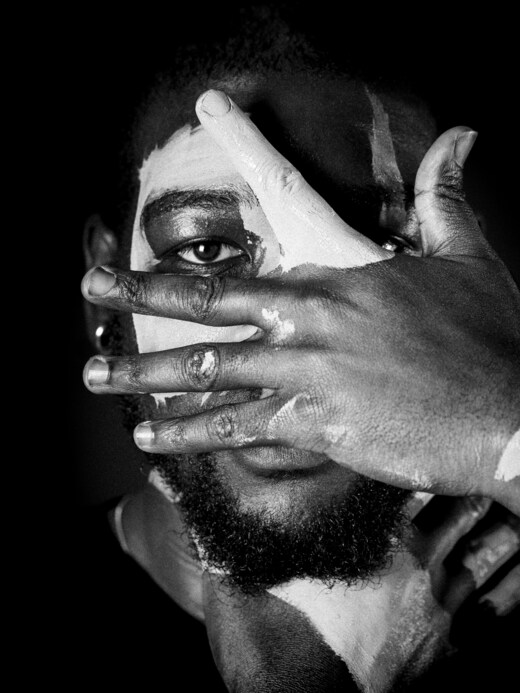
Photographer: Jurien Huggins
California’s mental-health diversion law, Penal Code section 1001.36, was designed to offer treatment instead of punishment for people whose mental illness played a significant role in their alleged offence. To qualify, a defendant must have a diagnosed mental disorder, show that the disorder contributed to the conduct, agree to treatment, and not pose an unreasonable risk to public safety. If successful, the case can be dismissed, and the record restricted.
On paper, this is progress: treatment, housing, and case management can replace jail and conviction, but in practice, diversion remains court-controlled treatment: participants waive rights, attend progress hearings, submit to monitoring, and face the threat of prosecution if they fail. This is treatment offered under the pressure of possible imprisonment.
The deeper wound is who gets this chance. Research shows that African and Hispanic men are more likely to experience criminalization rather than medicalization when mental illness is involved, while White women are more likely to be steered toward treatment.

A 2025 study found that mental illness was associated with arrest across groups, but African and Hispanic men had weaker associations between illness and treatment. Another analysis found that prosecutors were more likely to grant pretrial diversion to White defendants than to African or Latinx defendants with similar legal characteristics.
The disparities occur at every decision point: who is seen as symptomatic rather than defiant, who is taken to a hospital instead of booked, whose family can secure expert assessments, whose behaviour is interpreted as temporary illness, and who has the resources to complete treatment. California-specific research warns that limited demographic monitoring, inconsistent cultural competence, and inadequate service availability undermine the promise of diversion for racialized communities.
The Lil Nas X case forces us to ask whether celebrity status provides resources, visibility, and legal capacity unavailable to people with similar symptoms but less money and social capital. His public disclosure may help some people recognize symptoms and seek treatment; research on celebrity mental-health disclosures has found potential public-health benefits, including increased help-seeking.

Photographer: Julian Myles
Visibility has a cost: a diagnosis can become a headline, a redemption narrative, or a shield against questions about police conduct. Recovery concerns the person’s health and autonomy; public redemption concerns how audiences revise their moral judgment; institutional accountability concerns police conduct, prosecutorial choices, and racial inequity. One cannot substitute for another.
So, what can you do? Demand that your local courts publish diversion data by race, gender, charge, and income, and track completion and dismissal rates. Ask prosecutors and judges what safeguards prevent diversion from becoming net widening, drawing more people into court surveillance rather than reducing it. Support community-based mental-health services that offer care before a crisis, not after arrest.
When you read about the next African man in diversion, ask: would an unknown person with the same symptoms get the same chance? The answer will tell you whether this system heals divisions or just manages them.
Stay in the loop with exclusive news, stories, and insights—delivered straight to your inbox. No fluff, just real content that matters. Sign up today!