



Connect with us

Subscribe

Subscribe

Health

Physicians are trained to diagnose and to treat, they are not trained to admit vulnerability

“Alas, medicine clings to its culture of invincibility, and that’s why flying is safer than surgery.”

Photographer Cedric Fauntleroy

Many of us have the experience of boarding a plane with a prayer that the pilot has had enough sleep. With your surgeon, it’s a similar problem. Few people get to choose who will do their surgery. Even if you’ve gone to the trouble of arranging a referral to the best, how can you know the doctor hasn’t hit a rough patch? Maybe a crumbling marriage? Or a punishing work and travel schedule that simply has your surgeon fatigued? What can you do?

As individual patients, not much. In fact, wait lines are often so long there’s a disincentive to jeopardize that precious surgery date, but as for airline pilots, healthcare systems have safeguards to ensure surgeons are in good working order. Unfortunately, they are looser and more opaque.

Working hours for pilots are strictly regulated by law. Residents in training often work 24-hour shifts despite known fatigue risks. Fully trained surgeons often have no legally mandated work-hour limits. Schedules are set by hospitals and departments. Is there a culture of bravado among doctors, that they tolerate this?

When there’s a near miss in an airplane, the pilot faces the same consequences as passengers. When a surgeon makes an error, there is no co-surgeon to prevent, or correct it, and reporting of incidents is rare for fear of lawsuits.

Physicians are trained to diagnose and to treat. They are not trained to admit vulnerability. Yet, the profession is showing serious strain. More than half of Canadian doctors report feeling burned out, with many contemplating early retirement. In the United States, the numbers are similar. Across Europe, countries have begun to notice alarming levels of depression, addiction, and even suicide among doctors.

Why then does the public know so little about existing programs that support doctors and their families? Even healers need help when the going gets rough. We should be broadcasting programs that care for doctors, and they do exist.

The Ontario Medical Association offers a confidential Physician Health Program for: doctors, residents, and medical students dealing with mental health challenges, addictions, or professional stress. Other provinces in Canada have comparable services. The U.S. has the Federation of State Physician Health Programs. In Europe, the NHS Practitioner Health service in England, the Practitioner Health Matters Programme in Ireland, and programs in the: Netherlands, Norway, and France provide support.

Spain offers a particularly sobering example. In the 1990s, several high-profile physician suicides shocked the medical community there. The profession realized that denial and silence were killing their own, and that patients, too, were at risk. In response, the medical colleges created the Programa de Atención Integral al Médico Enfermo, or “Comprehensive Care Program for the Sick Doctor.” It has become a model across Europe, combining confidentiality with structured monitoring to ensure doctors get well and return to practice.

The model is strikingly consistent across jurisdictions, offering confidential support, separate from licensing bodies, to encourage doctors to step forward. Where risk to patients is clear, reporting obligations to regulators remain. The central aim is prevention: address problems before they spiral into impairment, mistakes, or withdrawal from practice.

Should the public know more about these programs? My answer is yes. Not to fuel distrust, but to build confidence. A doctor who seeks help is not a doctor to be feared; quite the opposite.

Still, it is easy to see why some bristle. Shouldn’t the system be stricter, not gentler, with impaired physicians? Isn’t there a danger these programs “protect their own”? Such suspicion misreads the design. These programs are protective, for doctors and patients.

Alas, medicine clings to its culture of invincibility, and that’s why flying is safer than surgery.

Newsletter Signup

Stay in the loop with exclusive news, stories, and insights—delivered straight to your inbox. No fluff, just real content that matters. Sign up today!


Dr. W. Gifford-Jones, MD is a graduate of the University of Toronto and the Harvard Medical School. He trained in general surgery at Strong Memorial Hospital, University of Rochester, Montreal General Hospital, McGill University and in Gynecology at Harvard. His storied medical career began as a general practitioner, ship’s surgeon, and hotel doctor. For more than 40 years, he specialized in gynecology, devoting his practice to the formative issues of women’s health. In 1975, he launched his weekly medical column that has been published by national and local Canadian and U.S. newspapers. Today, the readership remains over seven million. His advice contains a solid dose of common sense and he never sits on the fence with controversial issues. He is the author of nine books including, “The Healthy Barmaid”, his autobiography “You’re Going To Do What?”, “What I Learned as a Medical Journalist”, and “90+ How I Got There!” Many years ago, he was successful in a fight to legalize heroin to help ease the pain of terminal cancer patients. His foundation at that time donated $500,000 to establish the Gifford-Jones Professorship in Pain Control and Palliative Care at the University of Toronto Medical School. At 93 years of age he rappelled from the top of Toronto’s City Hall (30 stories) to raise funds for children with a life-threatening disease through the Make-a-Wish Foundation.  Diana Gifford-Jones, the daughter of W. Gifford-Jones, MD, Diana has extensive global experience in health and healthcare policy.  Diana is Special Advisor with The Aga Khan University, which operates 2 quaternary care hospitals and numerous secondary hospitals, medical centres, pharmacies, and laboratories in South Asia and Africa.  She worked for ten years in the Human Development sectors at the World Bank, including health policy and economics, nutrition, and population health. For over a decade at The Conference Board of Canada, she managed four health-related executive networks, including the Roundtable on Socio-Economic Determinants of Health, the Centre for Chronic Disease Prevention and Management, the Canadian Centre for Environmental Health, and the Centre for Health System Design and Management. Her master’s degree in public policy at Harvard University’s Kennedy School of Government included coursework at Harvard Medical School.  She is also a graduate of Wellesley College.  She has extensive experience with Canadian universities, including at Carleton University, where she was the Executive Director of the Global Academy. She lived and worked in Japan for four years and speaks Japanese fluently. Diana has the designation as a certified Chartered Director from The Directors College, a joint venture of The Conference Board of Canada and McMaster University.  She has recently published a book on the natural health philosophy of W. Gifford-Jones, called No Nonsense Health – Naturally!

Click to comment

Leave a Reply

Your email address will not be published. Required fields are marked *

Trending

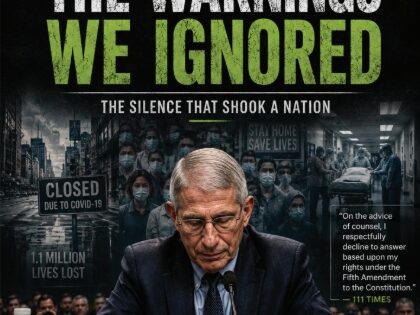
The Warnings We Ignored

Featured Cover Story

What It Means to Be a Lifelong Supporter: Larry Weltman on Loyalty, Community, and the Beautiful Game

Sports

Sharon Marley Reclaims Her Voice

Women Empowered

Toronto Collides Into New Culture

Entertainment

Advertisement
Newsletter Signup

Stay in the loop with exclusive news, stories, and insights—delivered straight to your inbox. No fluff, just real content that matters. Sign up today!
Legal and Advertising Disclaimer: Advertisements, sponsored content, business listings and other promotional materials are supplied by third parties. Their publication does not constitute an endorsement, recommendation, representation, warranty or guarantee by TCN Now Inc. Advertisers and content providers are responsible for the accuracy, legality and substantiation of their claims and for obtaining all necessary copyright, trademark, privacy and other permissions. To the fullest extent permitted by law, TCN Now Inc., its directors, officers, employees, contractors and affiliates shall not be liable for any loss, damage, cost, expense or claim arising from third-party advertisements, products, services or promotional content. TCN Now Inc. reserves the right to refuse, edit, suspend or remove advertising or promotional content at its discretion. Editorial and Content Disclaimer: The opinions, commentary and viewpoints expressed in signed articles, columns, letters, guest submissions and other contributor content belong to the respective authors and do not necessarily reflect the opinions or views of TCN Now Inc., its directors, officers, employees, editors or affiliates. Content published by TCN Now Inc. is provided for general informational purposes only and is not intended as legal, financial, medical or other professional advice. While reasonable efforts are made to ensure accuracy, TCN Now Inc. does not guarantee that all information will be complete, current or free from error. To the fullest extent permitted by law, TCN Now Inc. disclaims liability for losses or claims arising from reliance upon contributor opinions, third-party submissions or general informational content. Copyright © 2026 TCN Now Inc. All rights reserved. Unless otherwise stated, the text, photographs, graphics, logos, designs and other original content appearing on this website are owned by or licensed to TCN Now Inc. and may not be copied, reproduced, republished, distributed, modified or commercially used without prior written permission, except as otherwise permitted by law. Third-party names, logos, trademarks and content remain the property of their respective owners.

Connect
Newsletter Signup

Stay in the loop with exclusive news, stories, and insights—delivered straight to your inbox. No fluff, just real content that matters. Sign up today!